Matt McKerrow, chief executive of Cycling Ireland, tells Brendan O’Brien about the boom in the numbers buying bikes and cycling through the shutdown, along with the road forward now that the government has lifted all remaining restrictions on sport
Matt McKerrow: ‘We are seeing a bike boom now in terms of sales and the active piece being championed by government and backed by funding as well. Hopefully, people will continue to see the benefits of cycling long after the pandemic.’ Professional cyclist Imogen Cotter during a training session at her home in Ruan, Clare. Picture: David Fitzgerald
Q: What was the moment you realised that this was a challenge on an entirely different scale?
A: Whilst a number of people would point to that week of March 12/13 when the schools were closed and everyone started working from home, the one that resonates with me was the day that the 2k radius was imposed. That to me felt a lot more restrictive. You thought then, ‘hey, they’re really serious here’. Until that point, it still seemed a little bit as though it may come and go quite quickly.
Q: Has anything in your past professional experience been a help in dealing with this?
A: I’ve obviously had plenty of challenges in my career but this one outdoes everything. The big lesson that I would draw upon is to try and be grateful in the face of adversity and look out for the silver linings or the opportunities that come. At no point through this was there a scenario where people couldn’t ride their bikes, even when we were quite constrained by guidelines. We are seeing a bike boom now in terms of sales and the whole active piece being championed by government and backed by funding as well. Hopefully, people will continue to see the benefits of cycling long after the pandemic.
Q: You predicted losses to Cycling Ireland approaching half a million euro and detailed huge drops in membership when we spoke last month. You also said that was the ‘tip of the iceberg’ for the sport at large so how severe is the financial impact looking now?
A: The full implications won’t be known until we get back into a new normal. We have taken a significant hit on membership, on programmes, on event revenue. I guess the corresponding side is that we have been able to tighten the belt on expenditure wherever we can but the losses are still going to run into the hundreds of thousands of euros.
Q: The Government’s €70m rescue package for sport was announced last week. Will Cycling Ireland be looking to apply for some of the €10m set aside for the 78 NGBs aside from the ‘Big Three’?
A: We would be mad not to. We’ll have to wait and see what the criteria is for that and how it is structured but how I understand it is that there is €10m of the €70m for NGBs and aimed at helping us plug the gaps or respond to the challenges. We are going to take on a lot of extra costs in terms of making clubs and programmes and our activities Covid-safe so we would hope that there is some support to help us meet those expenditures.
Q: Sports in New Zealand are still awaiting details of a similar package announced there last month…
A: Yeah, I know that system well having worked down there and the other thing for them is their timing was really good. That’s funding for the next four years so their regular funding cycle was coming up. It is great to look at things over there but I would always caution that you look at the context. You can’t always look at what works in the UK or New Zealand and dump it here. You have to overlay the Irish context. They have very minimal cases of Covid-19 in New Zealand and they have been able to contain it.
Q: The small print in the Irish government’s rescue package talks of funds being available to NGBs ‘in need of assistance to avoid closing’. That looks, on paper, to be a very high threshold so what is your reading of it?
A: I would expect that to avail of that funding you would have to demonstrate some downturn or some impact and so it will be one of two things: a retrospective ‘tell us what it cost you and we will plug the gap’ or it will be a ‘tell us what your plans are to respond to this and to be stronger after this and we will fund that’.
Q: All sport has been given the green light to return. How are Cycling Ireland and the cycling community at large set for this? Will we see a full resumption of activity?
A: There is a roadmap document on our website that largely follows the structure of the government one so it was initially done in five phases. What we are saying is that we are still phasing some activities. So all club activity comes back in phase three but it is quite an undertaking to organise even a small cycling event so it won’t be an immediate ‘turn the taps back on, there’s an event this weekend’. It will probably take a few weeks so it may well be mid- to late-July before some of these events come back onstream.
Q: You have mentioned before that there are an estimated 900 races around the country every year. Is there scope for many of them still going ahead in 2020?
A: To take a bit of guesstimate, we think somewhere between 300 and 350 events will still happen this year. We have stayed in touch with the event organisers and the clubs running the races and each time we get a bit more of an indication.
There might be still a few that pull out or don’t go ahead. We will also have a fairly comprehensive week of protocols and checklists and guidance for clubs and events. There may be some of those projected 300-350 events that don’t happen on the back of that. It might be something as simple as the club normally uses the local GAA club for logistics and the GAA club is not available or it can’t be used for one reason or another. There are still a lot of unknowns with it.
Q: So does all this mean that something like the so-called ‘slipstream effect’ is no longer an issue anymore?
A: We will have guidance documents that go out to the events. The slipstream thing is still there but we haven’t had any guidance from the UCI about that.
In the absence of a peer-reviewed study that states ‘this is the way it goes’ all we will be able to do is offer our advice to people and then it ultimately becomes a personal responsibility piece.
It’s not something we can make a regulation on but we can make people aware of it so they can make their own choice.
Q: How is cycling progressing or not in other jurisdictions right now?
A: Again, it comes back to the context, doesn’t it? There are a number of European countries where their professional teams and their squads are up and going much quicker than we have been able to. We are hoping that our riders won’t get left behind given we still hope to have an Olympics next year.
I was reading an article saying there have been 1.3m bikes sold in the UK since the pandemic. I don’t have a corresponding figure in Ireland but if you go by any of the bike shops, some of them are talking about an eight-fold increase in sales. We did a feature on Ireland AM the other morning with one of our staff demonstrating how you would teach your children to cycle. That had to be delayed by three weeks because we had arranged to give away a few bikes as part of a promotion and the bikes just weren’t available. They had all been sold. You’re hearing people who are comparing bikes to toilet paper in terms of supply and demand. I never thought I’d hear anyone saying bikes are the new toilet paper.
Q: Three of the six major marathons have now been cancelled with New York and Berlin scrubbed this week. There are road cycling races cancelled on the UCI calendar as late as November this year. Where are we at in terms of the professional cycling scene?
A: There’s still a lot of unknowns. The World and European Road Championships are still set to take place later in the year. There’s some question marks about that and, regardless of whether they do or not, there are question marks as to whether we can travel or not. There’s not enough information to make solid decisions yet. It is just wait and see.
Q: Prof Paddy Mallon, an expert in infectious diseases, has said that a second wave is “inevitable” as restrictions are eased and foreign travel picks up again. What happens if sport is among any sectors shut down for another period of time?
A: We would all hope that will not be the case. We all responded to the pandemic having never done anything like that before so I guess if we get a second wave we have got some previous learnings and structures that we might lean back on.
Q: What would your message be to your clubs and sport?
A: The message is a resounding thank you to them for engaging in our online activities. You’ve probably seen our Zwift League that had 1,800 people competing. We were blown away by how successful that was and the engagement with it.
I would thank people for their patience and for their adherence to the guidelines, all they’ve done to date and all they will do as we plan to resume all club activities.
THE GOVERNMENT ARE set to provide €70 million in funding to assist Irish sport after the impact of the Covid-19 pandemic.
The funding will see the three main sporting organisations – the FAI, the GAA and the IRFU – receive up to €40m, which will be allocated on a case-by-case basis and will be a direct response to each of their specifc needs with regard to ‘solvency and continued excistence’.
The announcement was made this evening by Ministers Shane Ross and Brendan Griffin.
A resilience fund of up to €10m will be made available for the other national governing bodies, ‘who find themslves in need of assistance to avoid closing’.
Separately there will be €15m made available in the form of a sports club resilience fund, where clubs will be required to demonstrate they are in need of assistance to avoid closing.
Then €5m will be used for a sports restart and renewal fund, targeting sports clubs who are deemed ineligible for the Government’s restart grants scheme.
The funding will be invested through four new grant schemes to be developed by Sport Ireland and the Department of Transport, Tourism and Sport.
Sport Ireland will distribute the funding and they will also conduct a ‘robust grant application and assessment process’ for funding allocations to national governing bodies and clubs.
“The sport sector has been severely impacted by the Covid-19 pandemic and many sporting bodies and clubs are experiencing significant financial challenges,” said Minister Ross.
“We have had extensive contact with the sector and it is clear that the challenge is enormous and is being felt at every level. While the scale of this package may seem extraordinarily large, it merely reflects the enormity of the challenges being faced by our sporting bodies.”
The government has announced that all sporting activity in the Republic of Ireland can resume from 29 June.
Taoiseach Leo Varadkar said that most of the elements of easing coronavirus restrictions planned for Phases 4 and 5, including those relating to sport, had been brought forward to 29 June.
However, individual sporting organisations will decide how best to proceed after that date.
It is possible, according to Government sources, that most organisations might decide not to return to competitive action for some time, as they plan for adjustments that need to be made to limit the spread of coronavirus.
Strict limitations on spectators will still apply; the Taoiseach added: “We will all need to be careful. It will not be as it was before the start of the pandemic and for now sports will take place with very limited numbers of spectators.
“The virus hasn’t gone away. We are all still susceptible to it.”
Mr Varadkar said earlier this week that he expected gatherings of less than 5,000 people might be possible from September but as of 29 June up to 200 can be present at outdoor events, rising to 500 from 20 July.
Minister for Sport Shane Ross has also announced a grants package of up €70 million to support the sport sector.
Up to €40 million will go the three main field sports organisations – the FAI, the GAA and the IRFU – if needed to ensure their “solvency and continued existence.”
Their will be a ‘Resilience Fund’ of up to €10m for National Governing Bodies of other sports whose survival is threatened, €15m to support clubs whose survival is threatened and a ‘Sports Restart and Renewal Fund’ of up to €5m.
This additional funding will be invested through four new grant schemes, to be developed by Sport Ireland and the Department of Transport, Tourism and Sport, and administered by Sport Ireland.
IRFU chief executive Philip Browne thanked the government, saying: “Since the closedown of the country in March, Irish Rugby’s income has effectively fallen off a cliff and while we have moved quickly to significantly reduce our costs, huge financial pressure will remain our reality until we return to a time when we can welcome supporters back to full stadia across our professional game.”
FAI Interim CEO Gary Owens said: “I also want to thank the Government and all their agencies for their support for Irish football in what has been a very challenging time for everyone.
“Our funds have been tested greatly by the effects of COVID-19 so this funding from Government is most welcome. It is also a testament to the hard work of all our staff in these trying times when they have continued to work to get Irish football back onto the playing fields.”
A statement from the GAA expressed the Association’s “gratitude to the Government for the support package announced this evening.
“This funding will greatly assist our units in the weeks and months ahead as they prepare for a return to activity.”
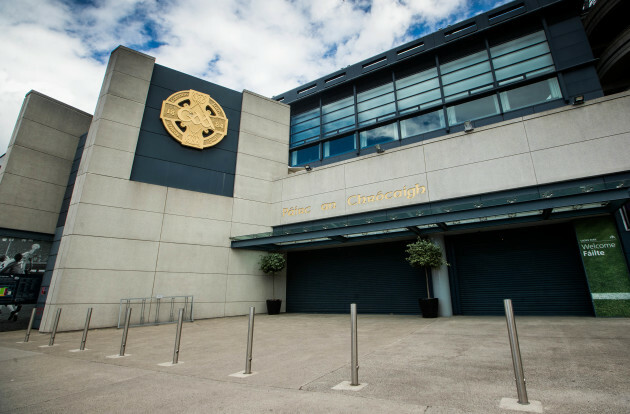
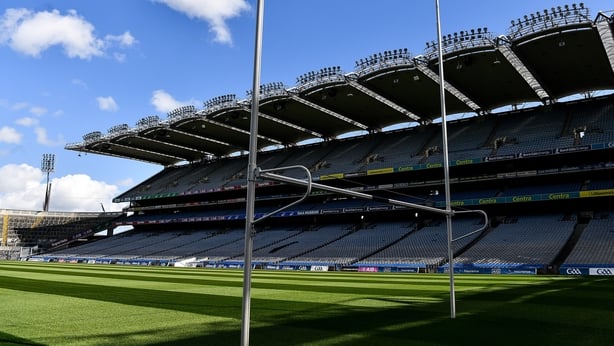
The GAA’s initial date for the return to contact training was 20 July and Croke Park officials expected that this could be advanced to 13 July and possibly even 6 July, but contact training could now begin when the pitches reopen on 29 June.
While this is likely to give county boards more time to play their club championships, it’s not expected that the All-Ireland series will come back any further in the calendar than the previously announced start date of 17 October.
As a ‘close physical contact sport’, rugby, along with boxing, had initially been listed under Phase 5 of the government’s phased easing of restrictions, with contact not permitted until 10 August.
The IRFU said last week that is wasn’t expecting club competitions to resume until September.
As all-island bodies, some of the GAA and IRFU’s clubs will only return to contact sport under Step 4 of the NI Executive’s Coronavirus Recovery Plan, the date of which has yet to be confirmed.
The FAI said that soccer training in the Republic would resume at all levels from 29 June, with friendly games allowed from 11 July and competitive matches from 18 July.
European hopefuls Dundalk, Shamrock Rovers, Bohemians and Derry City were allowed to resume training on 8 June and have now come through six rounds of Covid-19 testing without a positive result – the FAI confirmed on Friday night that they have suspended the testing as a result of the government’s announcement.
As of Wednesday, the League of Ireland clubs remained in talks with the Football Association of Ireland over a compensation package for an expected resumption behind closed doors in August.
Golf and tennis were the first sports to resume under strict social distancing conditions last month and horse-racing followed last week.
The government has announced a funding package of €70 million for the Irish sports sector to cover the financial hit brought about by the coronavirus pandemic.
The FAI, the GAA and the IRFU are the biggest recipients with €40 million set to be split between them – a package which will be of particular assistance to the cash-strapped FAI.
The €40 million will be divided between the three organisations on a case-by-case basis and will, according to the announcement, be based on each body’s “specific needs with regard to solvency and continued existence.”
Given that the FAI were already in financial trouble before the pandemic, they will be hopeful of receiving a significant boost.
In an interview with The Irish Times on Friday, interim CEO Gary Owens said that the crisis would likely cost the association €6 million while discussions are still ongoing with Airtricity League clubs in the hope of providing a financial package to get the domestic season back underway.
On Friday the FAI also announced that, in line with the new government announcements, Airtricity League and Women’s National Leagueclubs can return to full contact training from June 29th and play friendlies against amateur teams from July 11th.
The testing regime at the four clubs preparing for Champions League and Europa League qualifying – Dundalk, Shamrock Rovers, Bohemians and Derry City – will also cease after returning negative results from all six rounds of testing conducted over the last four weeks.
For the IRFU – whose annual income relies heavily on full Avivia Stadiums for Ireland internationals – the government fund will also help to cushion the impact of the current crisis with CEO Philip Browne welcoming the announcement on Friday by saying that “since the closedown of the country in March Irish Rugby’s income has effectively fallen off a cliff and while we have moved quickly to significantly reduce our costs, huge financial pressure will remain our reality until we return to a time when we can welcome supporters back to full stadia across our professional game.”
Also included in the fund is an extra €10 million for smaller national governing bodies in need of assistance to avoid closing, €15 million for struggling sports clubs and a final €5 million for a sports restart and renewal programme.
Bernard O’Byrne was CEO of the FAI when English fans rioted at Lansdowne Road in 1995 and the eircom Park saga was a daily headache. Now Basketball Ireland’s boss, he talks crisis management with Brendan O’Brien as sport responds to the Covid-19 pandemic.
Q: Basketball Ireland was the first sport here in Ireland to call a halt to its proceedings once the virus became an issue. What was the moment you realised that this was a challenge on an entirely different scale?
A: We had been staying in very close contact with our European body, which was the first body in Europe to pull down the curtain. That highlighted to us that it was something we should be considering. I also have to say that we had good discussions at board level and senior management level so it wasn’t just a kind of a knee-jerk reaction. It was well considered. We weren’t thinking that we would be the first, we just wanted to do the right thing for basketball.
Also, a light-bulb moment for me was the Cheltenham Festival because I had been reading about everything up to that and there they were saying that 16,000 Irish people were going to Cheltenham and I was thinking ‘there is something odd here, people are not thinking straight’. That was really it for me.
Q: You have faced big challenges in the past in your days as CEO of the FAI and again with Basketball Ireland which was in desperate straits financially when you started in 2011. Have those experiences been a help in dealing with this?
A: I’ve been involved in a few crisis management moments over the years! You don’t realise you are learning this stuff, it just goes into you. One of the things is to stay calm, especially if you are in a leadership position. People don’t like seeing the leader holding their head in their hands and saying, ‘what are we going to do next?’ Or equally, just running to the worst-case scenario all the time.
So it is about staying calm, thinking clearly and seeking advice. Talk to other people and then give measured direction. That experience just feeds into you, as I say. Generally speaking, I think the board and senior management gave good leadership to the basketball community through this.”
CEO of Basketball Ireland Bernard O’Byrne. Photo: INPHO/Tommy Dickson
Q: Given those experiences, are there any other commonalities in how you deal with these crises, regardless of the details?
A: Yes. Generally speaking as well, in terms of style of management, long dissertations on what should and shouldn’t happen are often ineffective. What counts are actions, example. When people see you taking an action that you are asking them to do, that counts a lot more than three or four pages of documents with instructions from on high.
You need to be at one with the community you are talking to. You need to understand their concerns. You don’t need to take on a mantle of, ‘I am going to solve this all on my own and it will be alright’. It has to be an inclusive thing where you can almost admit you’re not quite sure what you are doing at times but that you are going to do your best. Do it together and we can get through this. That resonates with people more.
Q: Where was the organisation at when Covid-19 struck?
A: We were on the cusp of a really good year. 2020 was going to be our 75th anniversary and, while that is only a number in itself and you can overstate it, we were going to use it as a vehicle to push on with a lot of the stuff we had done over the years.
So, for instance, we were going to host the European Senior Men’s Small Countries Championships down in UL. We were going to have a major 3 x 3 competition in Galway as part of the European Capital of Culture year and we had our Hall of Fame presentation in Croke Park for May.
All in all we had about ten events planned throughout the year that were going to be really positive for basketball and show that we are a vibrant sporting organisation. We wanted to get the message across that we are not also-rans in terms of the sporting landscape in Ireland, that basketball is a real presence in a lot of communities.
Q: You used the words ‘bankruptcy’ and ‘receivership’ when speaking on RTÉ a few weeks ago about the possible consequences of this crisis if financial aid isn’t forthcoming.
A: Our income is essentially the income we can generate from the [National Basketball] Arena, our registrations, our sponsorship and then government support. The sponsorships are kind of on hold and we all understand that with the difficulties that businesses are having. There hasn’t been any damage done yet but we still have to find out how things are going for the businesses we are involved with. Hopefully that will be all okay.
What has absolutely been pulled from under us is the income that we get through the Arena. As most people would know, it is not just a basketball arena, it caters for a lot of other sports and community events. Potentially, to the end of the year, we would look at losing income of €1.2m. On the other side of it, we will save expenditure possibly to the order of €7-800,000 but the net impact of €4-500,000 will be devastating for Basketball Ireland.
So we have to try and minimise that by whatever actions we can take but also by asking government for a resilience fund, not just for basketball but for sports in similar predicaments. While €4-500,000 might be nothing to some of the bigger organisations, it is a backbreaker for us.
Equally, €50,000 for smaller organisations could be a backbreaker for them. We need people to focus on that. We are also making this case to FIBA Europe as well, although there are 52 federations in Europe and you can’t really expect FIBA to give something to all of those.
Q: Aren’t there thousands of businesses in a similar boat in Ireland?
A: There are intelligent people in the Department of Sport and in Sport Ireland and they have to take a holistic look at it. It’s not just a question of giving money to sport, there is also the cost if you don’t give money to sport. If Basketball Ireland or another organisation implodes what is the damage to the communities? What is the damage to mental health? We would estimate that we have between a quarter of a million to 300,000 people involved in basketball on any given weekend. We need to do this to preserve society.
Q: What happens if a second wave of Covid-19 materialises and sport is among the sectors shut down again?
A: I was in on a FIBA meeting on Monday and that was the theme of it. The restart is difficult enough but one we can manage. But what happens if the second wave comes? We will be somewhat better prepared and the knowledge coming through is that being prepared, which we weren’t the first time, will help everyone. The health and safety of everybody will come first and if we have to close down then we will close down and if we don’t have basketball for six to nine months then so be it. Being prepared is the key. Hopefully a second wave wouldn’t be as bad.
Q: How complicated is a return for basketball given the close contact involved on the court and the very fact that it is an indoor sport in an era of social distancing?
A: They are the difficulties. We have told everybody that training can commence from July 20th. What might be difficult is the availability of facilities because a lot of that is beyond our control. Will schools be using their gymnasium for extra classrooms, which will basically make them unavailable to us? Will community centres be open and allow people in? We need to find out the situation as soon as possible in local communities.
We are also, as a group of indoor sports, talking to each other and we need to make sure that the [government’s] Return to Sport Expert Group appreciates – which I think they do but just need to hear it from us – that the concerns for us are quite different to those of outdoor sports. And they need to be taken on board.
Q: Finally, Darren and Neil Randolph spoke about their experiences of racism growing up in Ireland on the Basketball Ireland ‘Bench Talk’ podcast this week. What role can sports bodies play in countering this?
A: Sport in general is an intrinsic part of people’s lives. We saw the restart of the Premier League this week and it was very striking when the players took the knee. I would hope that everybody sincerely believes that but it was a very striking image.
Within basketball, there have been very few instances of racism through my tenure but I am sure it does go on. Often when it happens it may not be reported because people don’t want to make a big thing of it or just cope with it locally.
Three years ago we brought out an anti-racism policy. We have been looking at it the last couple of weeks, at setting up a group within Basketball Ireland that will proactively get the message out that basketball absolutely abhors racism of any kind and encourage communities to come into basketball as players, coaches and board members.
They shouldn’t feel that there are ever any doors closed to them in the basketball community.
Federation of Irish Sport welcomes Resilience Fund for Sport for the survival and reignition of sport organisations nationwide
Issued on behalf of our members, the 81 National Governing Bodies and 29 Local Sports Partnerships that organise sport and physical activity in Ireland
June 19th, 2020: The Federation of Irish Sport welcomes today’s announcement by the Government that a funding package of up to €70 million has been allocated as part of a Resilience Fund for Sport package. The Federation would like to thank the government, Minister Shane Ross and Minister Brendan Griffin for their support and is delighted that they have recognised the extremely valuable contribution that sport makes to Irish society.
This funding package will support the sport sector through;
– Funding of up to €40m for the three main field sports organisations – the FAI, the GAA and the IRFU
– A Resilience Fund of up to €10m to support the National Governing Bodies of Sport
– A Sports Club Resilience Fund of up to €15m to support clubs
– A Sports Restart and Renewal Fund of up to €5m
As the Federation of Irish Sport noted in its appeal for a Resilience Fund for Sport to the government in May, this financial assistance will go a long way in helping sports organisations who are facing particular financial difficulty to get back to business and to adapt to the new reality as restrictions lift.
We welcome the government’s acknowledgement of our call for support, and their commitment to investing in sport at local and national level to help Irish sport through this unprecedented emergency and back on to the road to recovery. The Federation will continue to work with its members and Sport Ireland to maximise levels of physical activity and participation in sport in Ireland.
We use cookies on our website to give you the most relevant experience by remembering your preferences and repeat visits. By clicking “Accept”, you consent to the use of ALL the cookies.
This website uses cookies to improve your experience while you navigate through the website. Out of these, the cookies that are categorized as necessary are stored on your browser as they are essential for the working of basic functionalities of the website. We also use third-party cookies that help us analyze and understand how you use this website. These cookies will be stored in your browser only with your consent. You also have the option to opt-out of these cookies. But opting out of some of these cookies may affect your browsing experience.
Necessary cookies are absolutely essential for the website to function properly. This category only includes cookies that ensures basic functionalities and security features of the website. These cookies do not store any personal information.
Any cookies that may not be particularly necessary for the website to function and is used specifically to collect user personal data via analytics, ads, other embedded contents are termed as non-necessary cookies. It is mandatory to procure user consent prior to running these cookies on your website.