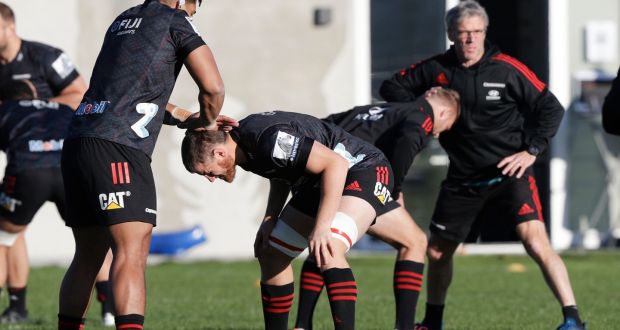
The Minister for Transport, Tourism and Sport, Shane Ross, and the Minister with responsibility for tourism and sport, Brendan Griffin, today (Friday 19 June) announced that a funding package of up €70 million has been approved by Government to support the sport sector.
This funding package will support the sport sector through;
– Funding of up to €40m for the three main field sports organisations – the FAI, the GAA and the IRFU,
– a Resilience Fund of up to €10m to support the National Governing Bodies of Sport,
– a Sports Club Resilience Fund of up to €15m to support clubs, and
– a Sports Restart and Renewal Fund of up to €5m.
Minister Ross said “The sport sector has been severely impacted by the Covid-19 pandemic and many sporting bodies and clubs are experiencing significant financial challenges. We have had extensive contact with the sector and it is clear that the challenge is enormous and is being felt at every level. While the scale of this package may seem extraordinarily large, it merely reflects the enormity of the challenges being faced by our sporting bodies.
This new funding package will assist our National Governing Bodies of Sport and sports clubs as they prepare to restart their sports under the Government roadmap. Sporting organisations and clubs are hugely important for the social fabric of every community in the country and we want to ensure that the sector recovers as strongly as possible from the current crisis. The Roadmap accelerations and funding being announced today will ensure the survival of our vibrant sport sector, particularly the network of clubs throughout the country. My officials will now engage with Sport Ireland to design new grant schemes, which will be administered by Sport Ireland.”
Minister Griffin said “Today is the most important day for Sport in this country during my time in this office. I am delighted that the Government saw fit to respond to the many loud calls for help from our sporting bodies. The scale of lost revenues, from the smallest of club fundraisers to a sold-out stadium, is breath taking. Today’s package will go a long way to aiding the badly needed recovery.
Despite all of the challenges, it is heartening to see that so many people have recognised the importance of staying active during the Covid-19 crisis. We are now seeing more adults than ever actively participating in sport, with huge numbers having taken up cycling, running and recreational walking. I welcome today’s acceleration of the Roadmap reopening – it’s great news and greatly appreciated by sports people throughout Ireland. There is a huge opportunity now to secure a lasting improvement in the health and wellbeing of our nation by engaging with children and adults who have become more active during the crisis and putting in place programmes to help them go from casual sporting activity into lifelong participation. The Sports Restart and Renewal Fund will assist sporting bodies and local sports partnerships to maximise this opportunity.”
ENDS
NOTES FOR EDITORS
This additional funding will be invested through four new grant schemes, to be developed by Sport Ireland and the Department of Transport, Tourism and Sport, and administered by Sport Ireland.
Funding allocations to NGBs and clubs under the new scheme will be determined following a robust grant application and assessment process conducted by Sport Ireland.
Sport Ireland will announce an open invitation to applications from funded bodies for assistance under the grant scheme.
The funding will be distributed by Sport Ireland through the National Governing Bodies (NGBs).
The schemes would be designed to ensure that grant aid would only be provided where Sport Ireland is fully satisfied that the funding is absolutely required.
Combined funding of up to €40m will be made available to the three main field sports organisations – the FAI, the GAA and the IRFU. Funding will be allocated on a case-by-case basis and will be a direct response to each NGB’s specific needs with regard to solvency and continued existence.
A Resilience Fund of up to €10m will be made available to support the National Governing Bodies who find themselves in need of assistance to avoid closing.
A Sports Club Resilience Fund of up to €15m will be made available to support clubs from all of the NGBs. Again, the clubs will be required to demonstrate that they are in need of assistance to avoid closing.
A Sports Restart and Renewal Fund of up to €5m will be made available. Sports clubs are deemed ineligible for the Government’s Restart Grants scheme (as they are not solely commercial trading entities). In addition, they have been excluded from Government supports for the community and voluntary sector to cope with the challenge of COVID-19. This Fund will seek to address these exclusions.
Q: What was the moment you realised that this was a challenge on an entirely different scale?
A: Early on we were very conscious about what was happening in Italy and trying to assess the implications of the coronavirus outbreak. Many of our athletes were attending an elite training camp in Assisi, which is a good distance from Lombardy, but too close for comfort. We actually took the team home early from that camp as a precaution.
On a personal level, the 12th of March was the day before my youngest was meant to make her confirmation and also the day the schools were closed down. Soon after our Board of Directors issued a directive to all of our clubs to close.
In the background, the IABA, in conjunction with Belfast City Council, were planning on hosting the European Schoolgirls and Schoolboys tournament there in June. That rumbled on for some time as we tried to work out if there was any possibility it might go ahead. Like many other things, unfortunately, the possibility reduced to nil.
The biggest realisation of the challenge ahead was when the qualifiers for the Olympic Games in London were closed down mid-session. It quickly became apparent as governments across Europe announced plans to lock down that the Games themselves were now in jeopardy.”
Q: Two Turkish boxers and one of their coaches subsequently tested positive for Covid-19 after that London event and there was a lot of criticism about it being allowed to proceed. Did it feel like a lose-lose situation for the likes of the IABA?
A: Yeah. In hindsight, you would certainly look back and say that they shouldn’t have gone ahead in the first place. But they were on and if our boxers weren’t there they wouldn’t have had the possibility of qualifying at the European event and it would have been all down to the world qualification event after that.
The boxers certainly wanted to be there. There were a lot of unknowns at the time. So getting them over there and coming away with one person qualified in Brendan Irvine was excellent and nine of our boxers are still in with an opportunity of qualifying from that championship because it will pick up exactly where it left off in January or February of next year.
But looking back on things you would have to say the competition most likely should not have happened in the first place.
Q: What are the implications for our elite boxers of the Tokyo Games being put back 12 months?
A: In some ways, they are in an unique position because there is that qualification competition already started, the Europeans. That structure will remain in place and we have been assured of that by the IOC. So Brendan Irvine has qualified and will remain qualified.
All of the other boxers who came home mid-session, including Kellie Harrington, Aidan Walsh, their next fights will be against whoever they were due to face before in London in the qualification sense.
So they have that goal in sight. They are looking towards early next year and then, after that, there will be another chance for people to qualify in May or June. That will bring about its own drama as to who will qualify from the national structure to go to that final qualifying event and then how they will actually do out there. We are a sport that is focused on the Olympics and on our team.
Hopefully the Games will now take part in 2021 and we will have a large male and female representation and we will also be able to host the European Schoolboy and Schoolgirl Championships next summer.
Q: Has anything in your past professional experience been a help in dealing with this?
A: On a few different levels, past experience and resilience learned has been a help, but nothing has been equal to this. I was a director of a company directly linked to the construction industry when the last recession hit where many in that sector were adversely affected, some losing their companies, others losing their jobs, which is never easy.
Boxing clubs in this country, through good and bad, have typically struggled. Many are from socio-economically disadvantaged areas so they are somewhat battle-hardened and used to making the most from a little.
Q: So how has the crisis affected the IABA and the wider sport in a business and financial sense?
A: To stay with the boxing clubs, throughout any hardships they have suffered in the past, they have always maintained an ability to help their members and the surrounding community. I really hope they can continue to do so into the future because that’s as much a part of what we are as an organisation as any success we have achieved.
Financially speaking, the losses we have incurred and the anticipated losses for the organisation will be very severe, both at a national organisation and at a club level. We have a very real concern for many of our clubs throughout the 32 counties, that they will find this period extremely challenging, and some will not make it through.
Our insurance excludes epidemics and the outbreak will certainly have a severe financial impact, resulting in financial losses through event cancellations in the National Stadium which is also used for bingo, as an exam venue and for music concerts. The impact on our commercial revenue streams and subscriptions will be in the region of €1m for 2020 with reduced footfall and declining revenue streams likely to continue into 2021.
We are very grateful for our main sponsors who remain on board: Liffey Crane Hire, Principal Construction and of course O’Neills who have been with us for a long, long time and who are doing super work in the fight against coronavirus themselves.
Q: Boxing was originally due to return in the last of the five phases, on August 10, in the original roadmap. Where is it at now given things have progressed quicker than expected?
A: We’re scheduled to be in the last phase and that is in almost every country you look at. The last phase in Ireland was scheduled for the 10th of August and boxing is in with the likes of wrestling and rugby so our Board of Directors currently have a draft return-to-sport criteria set out for our clubs. We are trying to make it as user-friendly as possible for the clubs to be able to implement while adhering to the health service guidelines that are in place.
As it stands, the board has given a directive that our clubs won’t reopen until the 10th of August. I can’t gainsay that at this time but the dates for everything are fluctuating given the acceleration in loosening restrictions by the government.
Q: How complicated is a return for boxing in an era of social distancing given the close contact involved in and out of the ring?
A: If you consider the guidelines that have been set out in terms of social distancing, that is the biggest barrier of all. So, whether it is the one-metre or the two-metre rule is really inconsequential to boxing because you can’t operate at either in an effective way in terms of competition.
You’ll also consider that many of our clubs are quite small and the membership would, in general, be tightly packed in together. So, again, that is a big issue. Anyone who has even done boxercise training, never mind competitive boxing, will understand how much of a sweat you actually build up when training. Those droplets do fly off whether you are punching a bag or skipping. There are a lot of body parts moving and sweat gets around. It does create its own complications.
We also have boxers wearing gloves that are always shared within competition so that we can maintain the integrity of the glove. You have cornermen who have to take out gum shields for the boxers. The referee is very close to the boxers so he can notice any injury or cut. That causes issues. Then our officials, including doctors, are very close to the ring where droplets are likely to fall. It makes it very complicated where social distancing is required.
Q: How is the return to the ring looking in other countries and are there any pointers you can use from other jurisdictions?
A: Boxing is a small sporting organisation in Irish terms, despite being our most successful at the Olympics, so we are keeping a close eye on how some of the larger contact sports such as the IRFU, the GAA are dealing with the situation.
I’m in close contact with my counterparts in the UK and I’m also on the board of the Federation of Irish Sport and, as such, I have close contact with the other CEOs. The approach being taken across the board is very similar at this point, which is very important.”
Michelle Carpenter, chief executive of Rowing Ireland, talks to Brendan O’Brien about the unique challenges presented by the current crisis, the financial realities that still lie ahead and the optimism that comes with the re-opening of sport and society at large in recent weeks.
What was the moment you realised this was a challenge on an entirely different scale?
I was in Vienna at a European Rowing meeting back in February and Italy started coming in with numbers at that stage. I was talking with Jean-Christophe Rolland, the president of FISA [the International Rowing Federation] and he was beginning to get concerned at that stage. I thought at that time that we could be looking at something very difficult here.
We started going into lockdown with our high-performance athletes in mid-March. They had relocated to Lee Valley Golf Club, which is within 5km of the National Rowing Centre, so we had put plans in place. Nonetheless, I don’t think anyone realised how difficult this was going to be.
We had a board meeting on the 8th of March and someone joked we mightn’t be able to hold our AGM at the end of the month and we all looked with horror. There as a bit of us hoping this wouldn’t happen bit it had certainly been ramping up for a time in my own mind.
Has anything in your past professional experience been a help in dealing with this?
My experience in communication and public information was a huge benefit in this circumstance. I worked on the launch of the euro, which was a pan-European public information campaign with the European Central Bank, between 1999 and 2001.
So that was a huge benefit so being able to communicate around the number of platforms. As CEOs you are dealt with an awful lot of problems day-to-day, curveballs. Be it accidents, be it risk, be it a setback.
Last year Sanita Puspure had the setback with her sister being sick and you just have to cope with things like that and put a strategy in place.
How daunting has it been to deal with the entire range of issues that have arisen: From financial concerns, dealing with stakeholders, applying new Covid-19 guidelines and everything else?
I think we have adapted very well. We initially put a Covid-19 working group in place and we had it in place in the middle of March, fairly immediately after the initial lockdown phase started. So we were already meeting weekly and assessing what we could do and put in place.
For our community it has been fairly devastating. We have obviously had no regattas and our clubs have had to shut down so we felt that it was really important to communicate with our clubs and let them know what was happening and to support them.
We were one of the first national rowing organisations to put out a rowing protocol and I have had calls from a number of other rowing organisations around the world asking if they could use our protocols and adapt them but we still have a long way to go. We still haven’t got a framework yet for a return to regattas and that’s something we will have to look at in the next few weeks.
How severe do you think the financial losses will be for your organisation and your sport at large?
It will be huge. Our clubs have had to shut down. They can’t hold regattas, which is the main financial driver for clubs. As we go into a new phase of membership in September we will be looking at that and we are very concerned about that. We have put forecasts in place as to how we will work around that so it has been devastating for our clubs.
Then the whole recession part of it, the ‘pandession’ as David McWilliams calls it, we don’t know what effect it will have on the finances and on government finances next year as we head into Tokyo again. We are very concerned about that. In terms of sponsorship we have Kinetica on board and they have been very good to us but other organisations that we were talking to or looking to work with are not now in a position to support us.
Do you see any overseas models in your sport or elsewhere which might be applied here?
As a nation in Ireland, sailing and canoeing have done very good plans and we were one of the first to put something in place. We worked with them and shared ideas on that because we had some concern initially over water and could the virus be in the water.
We were in contact with FISA about the slipstream effect but really we had done a lot of research on it ourselves and looked to people that we knew who were public health experts and had worked in the field of pandemics who could give us advice on that.
Can you explain that ‘slipstream effect’ and is there any further consensus on it internationally?
The best way to explain it is if you are sitting in a car and the car in front puts on the wiper wash and it hits your car. That’s what you’re dealing with. So you have someone in front of you in a boat. They are huffing and puffing and spitting and all the rest and breathing heavily. So the FISA medical commission have looked at that and they reckon that one metre is enough of a distance in line with the slipstream effect.
In a boat you are 1.2 metres apart anyway, in a crew boat, so we are very hopeful that it will be very safe. There has been very good research and feedback in recent days about the strength of Covid-19. It seems to be losing its strength and then the reproduction rate has gone way down so hopefully in a number of weeks and months the reproduction rate will be so low that the chances of catching it are… you might as well buy a Lotto ticket.
How important is that our high-performance athletes will be able to access their training bases in the coming days with the easing of travel restrictions?
Time is of the essence when you are training to the standard of our high-performance athletes, two or three times a day and seven days a week. They are delighted to be back. We would have 16-20 athletes using the National Rowing Centre, which is in the middle of the countryside in Cork, and none of them live within the 5km zone. Maybe one, but that’s about it. They only needed a one-off dispensation to travel outside the 5k.
After Monday they will be going into Lee Valley Golf Club which is within the zone and they will be living there as family units to protect them more than anything else and ensure that they are safe from catching the virus. For example, one of the athletes lives with a nurse and it is just too much of a risk to take so we are putting them all into their own camp-like environment from Monday. They get on great together and they can train off each other again. They have missed a whole season of racing so they need that.
When are we likely to see our elite rowers competing in international regattas again? And when will competition start back again here at home?
The first time we might see our elite rowers competing is possibly at the Irish Championships or a festival of rowing. The working group on Covid-19 is looking at that.
We have a championship committee which will also look at that. If we feel that is safe to do then our elite athletes will take part at our own centre in Cork which would be fantastic to see.
The European U23s are scheduled to take place in September and the European Juniors and Seniors in October.
It looks promising that they will go ahead and give them some opportunity to compete this year.
What is the feeling on the ground? Is there optimism with light at the end of the tunnel?
I’m always glad to have fun so I would always see the optimistic side of things. I think there is a lot of optimism out there that clubs are back and we have been able to get back because of the use of the single scull. Clubs are looking forward to getting back in crew boats when they have the okay to do it.
I know some national governing bodies are looking at summer camps so we would be looking to see if that is a possibility.
We all want things, we are all pushing for things like we were pushing for high-performance athletes, but public health is the priority at the end of the day and we all know that we have to adhere to that.”
Exactly two years into his role as GAA director general, Tom Ryan was faced with the monumental task of guiding the organisation through the coronavirus crisis. Speaking to John Fogarty, he discusses the experience and the next steps for the Association
Q: What was the moment you realised this was a challenge on an entirely different scale?
A: We were part of a little network of stakeholders that would assemble once a week where we would get a briefing from the health authorities. When the schools closed on March 13, we were ready to shut things down. You’re planning for the worst-case but in the back of your mind you’re anticipating that it’s not going to materialise.
So much of what we do is centred around kids and schools that it just wasn’t going to be sustainable for us to carry on. When the mass gatherings announcement was made too, that was it.
Before then, we knew there was something looming. It was in media reports for a couple of months and I’m not saying for a second you’re flippant about any of it but it felt like a story in another part of the world.
Q: Has anything in your professional experience been a help in dealing with this?
A: Not on the scale of this. When other problems arise in whatever sphere you’re working in, no matter how long it takes or how difficult it might be there are solutions.
You can mitigate and put in contingency plans but we cannot fix it or solve this underlying problem.
There is a lot of collective experience between our volunteers and staff that helps but we have never come across anything like this.
Q: The decisions to temporarily cut wages of GAA staff. Would they be among the most difficult decisions you have had to make as director general?
A: Ah yeah. Yeah. I haven’t much to add on that.
Q: The reaction of clubs to the crisis has been incredible. Is there one story of volunteerism or care for the community that stands out for you?
A: The main thing that stands out for me is not one story but how it started and grew. It was completely organic and that is what you would expect it to be given the organisation.
It wasn’t one section of the GAA saying: “We’re going to do this now.” It was a spontaneous, natural outpouring of goodwill and a desire to help.
Football and hurling makes a big difference to people day to day, week by week but it wasn’t just about the sport. What motivates a lot of them is being a positive influence in the community.
Independently of each other, they came to the same conclusion that this was something that they needed to get involved in.
There were about 30,000 people, about 80% of clubs helping on a regular basis and we knew that because of the vetting.
We had to actually catch up with the effort that was being put in by members. In many cases, they were helping people who would have no interest in the GAA; they were just helping people.
It was remarkable and I hope it is sustained. No different to yourself or myself, people get worn out.
Q: John Horan mentioned distance or virtual training via Zoom could be one of the positive stories to emerge from the crisis for the GAA in terms of the savings that could be made. Have you identified any more?
A: We have cut down pretty much anything that is discretionary. The timing of it was tough for us in that we earn our income during the summer whereas our costs are spread right throughout the year.
We had come through the six months of the cost cycle and zero of the income-earning cycle.
When the income isn’t there, you have to cut back on the costs as much as you can but you can’t repair that entire gap by cutting costs.
There is an element of diminishing returns in that we have to try and plan so as to be ready to go again at some point.
That means a core level of functionality around things like keeping the coaching network intact and what has got us to where we are.
Q: The Federation of Irish Sport has called for a government resilience fund. How does that tie in with the GAA’s plans to seek emergency funding?
A: There’s a clear sense of community in the Federation of Irish Sport and it has been heartening.
There has been a very collegiate approach with the other sports that have an international dimension and they’re sharing much of the experience and knowledge through their networks in terms of returning to play.
The efforts of the Federation, Sport Ireland and the Department of Sport have been very good in terms of keeping us abreast of what was coming down the tracks and ensuring our voice is heard as best as possible.
We haven’t really focused too much on the finance side of things. First of all, it’s a public health emergency and you could get the tone very wrong.
The finance needs of a sporting organisation are very important, especially from where I am sitting, but to this point they weren’t of primary concern to the nation or the Government or to ourselves, to be fair about it.
We haven’t really galvanised behind that yet but when we do, we will do it in tandem with the sports community.
Q: John Horan said there will be in excess of a €50 million loss in revenue to the GAA as a whole should no further games be played in 2020. Would you be able to give a more precise figure?
A: We will obviously cut back our costs accordingly as well. John was about right with the €50m figure. We’re at the stage now where the finances for the year aren’t retrievable. It’s still very important but you’re not going to bring that back.
There’s no point in us jeopardising other things. If you think about it, the biggest asset we would have is reputation.
We have been trying to do as best we can over the last while and avoiding mis-steps so we don’t put anyone at risk or damage the standing of any club or any member, or the organisation as a whole.
That is still as important because the financial argument is almost over this year. We have to make sure next year and the years after we’re not paying a price for this but you still wouldn’t put that ahead of the reputational stuff.
There are ways we could look to garner income — we just won’t do it. They don’t fit in with what we are or the situation that we’re in. It’s a crisis that is so much deeper for the GAA than the financial.
A good financial year is great but it doesn’t define what is a great year for the GAA.
This year will be a terrible financial year but maybe if we can get back up and running and do it in a safe way and in such a way that the organisation can grow it can be deemed an okay year for the GAA as it overcame adversity.
It might sound a little folksy but we all have to hope for something.
In the strangest of times, notions of what makes nations first or third world seem strangely displaced. The economy alone just doesn’t seem to cut it when how to react to a virus becomes a barometer for how civilised a country behaves.
When the pandemic threat was made real, New Zealand closed its borders then turned to focus exclusively on protecting its citizens. It is now reaping the rewards of affirmative action. So much so that sport will break out all over the country this weekend.
From this side of the globe, moving into summer as New Zealand prepares for winter, the words sport and team appear to a socially distanced land strangely unbelievable. Add the word contact and it becomes quite fantastic.
It’s not just golf and tennis and any other recreational activity in which people can stay apart. This weekend New Zealand’s prime minister, Jacinda Ardern, has told her 4.9 million citizens they can throw open their doors and begin playing again at community level as they press hard towards the final phase of opening up lockdown.
Team sports. That means rugby, soccer, hockey, netball.
From afar and given the creeping crisis professional sports are facing in Ireland, the very notion appears as novel as the virus itself. Professional sport and Super Rugby, involving just the New Zealand teams, are not yet on tap but are soon to be. Matches will initially be played without spectators, but are scheduled to start in mid-June as the country streaks ahead of the curve.
Over the opening period at least, while restrictions on the size of gatherings of no more than 100 remain in place, the Super Rugby competition will be contested over 10 weeks (two full rounds, home and away) in a league-style format (no finals) and will be played under strict health protocols with essential personnel only allowed at grounds.
Normalisation
The numbers have allowed New Zealand begin their normalisation process, while Irish contact sports can only guess when teams will be back competing on the pitch. Ireland, with confirmed infections of 24,735 and 1,624 deaths as of noon on Wednesday, compares poorly with New Zealand’s 1,154 confirmed cases with 21 deaths.
“I’m not sure if [New Zealand] people reflect outwardly their pride in that we are doing better than someone else. I think there is a sense of togetherness and that we have been through something tough and we have all contributed,” says Sport New Zealand chief executive Peter Miskimmin.
“Our prime minister, she’s very articulate, they way she has been able to speak to New Zealanders. The commitment and behaviours around it has meant we all have a sense of responsibility and duty. I think we also felt that through some of the sacrifices made with family and community and with job losses, we have done hard yards.”
Ardern announced earlier this month that level two, down from level four, would see the return of shopping, eating out, weddings, domestic travel, schools, sport and seeing friends, but all under strict rules. With that came close-contact sport, which can begin on Saturday provided records are kept of who is playing so contact tracing can take place.
“Moving from level three to level two is based on not having any new [Covid-19] cases for about a week,” says Miskimmin. “The last two weeks we have been only allowed to congregate in groups of 10. If you are a rugby team or football team and a squad of 20, you’d have to break that up into two squads practising and getting ready.
“The prime minister then just extended that as of the end of this week and now we can get 100 people in a gathering. That allows people to start playing competitive rugby, hockey, football, all the things we do in large numbers here in New Zealand.”
The professional sports have had to take a different route back to normality. Because the athletes are paid to play, they were put into the same category as other employees in the workplace. Consequently they were governed by WorkSafe New Zealand and a different set of regulations.
Driven home
What was driven home by Sport New Zealand and understood by politicians was that not being able to play sport was much more than a first world issue of being denied the normal suite of pastimes, but more fundamental to the health of the country.
“Our rugby and netball teams, because they are professional athletes, were deemed to be in the workplace. As a result we could get them back into training again. But they haven’t started playing.
“Training allows them to come together outside of their normal bubbles into a wider squad environment and start as a group. That was something we pushed strongly for under level two and that’s what has been granted.
“Now we are likely to get our professional rugby and netball competitions up sometime in the middle of June. That is recognition from this government just how important the professional athletes are, the professional competitions are to the wellbeing, entertainment and passion of New Zealanders .
“When you get your prime minister standing up and in her weekly or daily message saying please get outside, please recreate, please be physically active because of all the benefits, it takes it away from sport for sport’s sake. It actually provides a greater understanding of what it can do for individuals and communities.”
While Miskimmin agrees Sport New Zealand pressed hard for sport to open up quickly, the organisation did it without moral hazard. The country is one of the first in the world out of the blocks and the unlocking is being done with an abundance of care and responsibility.
As far back as the end of April, Ardern was promoting the idea that New Zealand had stopped the “widespread, undetected community transmission” of the virus and that tough lockdown restrictions were scheduled to ease, adding they had “avoided the worst” in the pandemic. By then health officials knew where all the new cases were coming from.
“What we have done is take a really responsible leadership across our sector and we worked very closely with our major codes, the basketball, rugby, netball, hockey, football, rugby league,” says Miskimmin.
“What they all agreed is even though we could come back into contact, we did need to take some time at community level to make sure that all the people coming out of the lockdown could train and get their bodies ready. These two or three weeks they are preparing to play. Don’t push the envelope just yet.
‘Playing condition’
“Rugby and netball need to provide three or four weeks for their athletes to get back into playing condition. Community sport can start on Saturday, but for the vast majority of people we’ve said, ‘look take two or three weeks and lets come back in a sensible and right way.’
“I think most codes won’t rush. They’ll do it in an organised and responsible way. Part of it is they want to make sure that not only the players but the supporters, the parents, anyone coming to watch can feel they are doing it in a safe environment.
“It has to be seen as something that doesn’t put New Zealanders at risk after all the gains we have made after eight or nine weeks of lock down. We’ve done hard yards here. We want to make sure we are taking a responsible approach.”
On Wednesday Miskimmin was on a call with a number of CEOs and with Ardern, who was talking about the social connections to help New Zealand through the recovery. She has been front and centre of the pandemic campaign. Some days earlier while she was making announcements on what people could and couldn’t do in terms of sport, she suggested that they could go to the Sport New Zealand website to look at what they could do.
“It actually crashed our site,” he says. “There were 10,000 hits within about five minutes. That demonstrated to us the passion that New Zealanders have. That was a bit of a learning for us. It was a nice silver lining to a terrible situation.”
Relatively speaking, it has been a Kiwi sprint. Ireland in a marathon run are, for now, continuing to look for that silver lining.
Emmet Ryan reflects on the call for a Resilience Fund for sport after a week where key figures in the sector have painted the picture of sporting organisations becoming non-viable unless something is done to financially support the sector.
The governing bodies of minority sports are calling on the government to create a sports resilience fund.
Multiple national governing bodies (NGBs) told the Business Post that the damage caused by Covid-19 restrictions posed existential threats to their sports.
“We are managing okay right now but we will start to feel the pinch as we go further if we lose membership,” Sarah Keane, chief executive of Swim Ireland and president of the Olympic Federation of Ireland, told this newspaper.
“We’re concerned about what happens later in the year. If swimming pools don’t open, we can’t run the sport. There is a concern that 20 to 30 per cent of pools will never open again.”
Swim Ireland has 20,000 members across 160 clubs in Ireland. Keane wants to see a resilience fund set up in order to prevent facilities or clubs being forced to close permanently because of the current restrictions. It is proposed that the fund could be administered by Sport Ireland, the governing body.
“Everybody is on the same wavelength that a resilience fund is required. If some clubs and facilities close down, it will forever change sport,” Keane said.
Ciaran Gallagher, chief executive of Gymnastics Ireland, said that 88 per cent of the 1,500 people working in the sport had been laid off or furloughed since March. The sport has 36,000 members across 100 clubs nationally.
“Some clubs would have been in a position where they had enough cash to take them through to summer. Others were more at risk as they only had fees paid up to Easter,” said Gallagher.
“The government has an incredibly difficult task, but sport provides everything across the health and wellness agenda. We need a programme that recognises that and supports the specific business considerations in the sector.”
A drop in membership fees has also put pressure on Sailing Ireland. Its chief executive, Harry Hermon, said the fiscal impact was already damaging clubs.
“I’m hearing from clubs telling me they can hold out another month or two but, if it goes any longer, they won’t open again,” Hermon said.
“We already know from the commercial centres there are some that won’t reopen, as they have effectively gone bust.”
Revenues in the sport, which has 22,000 members in over 200 clubs and centres, have dropped by 80 per cent in the second quarter of 2020. A similar loss in member revenue has hampered Triathlon Ireland, which has 20,000 members across 100 clubs.
“There are 22 staff. When we had to close the office, I thought I’d have to put a number on short time working. We managed to avoid that thanks to the income support scheme,” said Chris Kitchen, chief executive of Triathlon Ireland.
“There’s still some nervousness because we’re waiting to see how it will be extended. Membership income has fallen through the floor. In terms of total income, we were down 48 per cent against budget in March and 76 per cent down in April,”
Kitchen said a resilience fund could be the difference between sports being able to come back or shutting down once the crisis passes.
“We are probably able to weather the storm with our reserve but, if there’s another closedown, it wouldn’t be prudent of us to blow all our reserve,” he said.
“We’re not asking with a begging bowl. We want to be constructive and give value for any money we get.”
We use cookies on our website to give you the most relevant experience by remembering your preferences and repeat visits. By clicking “Accept”, you consent to the use of ALL the cookies.
This website uses cookies to improve your experience while you navigate through the website. Out of these, the cookies that are categorized as necessary are stored on your browser as they are essential for the working of basic functionalities of the website. We also use third-party cookies that help us analyze and understand how you use this website. These cookies will be stored in your browser only with your consent. You also have the option to opt-out of these cookies. But opting out of some of these cookies may affect your browsing experience.
Necessary cookies are absolutely essential for the website to function properly. This category only includes cookies that ensures basic functionalities and security features of the website. These cookies do not store any personal information.
Any cookies that may not be particularly necessary for the website to function and is used specifically to collect user personal data via analytics, ads, other embedded contents are termed as non-necessary cookies. It is mandatory to procure user consent prior to running these cookies on your website.