
Oct 11, 2019
On behalf of the Federation on Irish Sport CEO Mary O’Connor would like to welcome the 2020 Budget for Sport and Physical Activity and to thank you all for the work that you do. Increased Government investment in Sport and Physical activity is as a result of the ‘collective’ having a shared passion and vision of providing opportunities for people in our country to enjoy sport and be physically active.
Please see below for your attention.
Federation of Irish Sport welcomes increased investment in sport in Budget 2020
- Government allocates €125m to sport, representing a €5.5 million increase on 2019
- Additional current funding to support National Governing Bodies of Sport (NGBs) and Local Sports Partnerships (LSPs) in advancing the actions outlined in the National Sports Policy 2027
- High-performance sport in Ireland receives an additional €2 million allocated to support preparations for the Tokyo 2020 Olympic and Paralympic Games.
Reflecting on Budget 2020, Federation of Irish Sport CEO Mary O’Connor, said:
“We welcome the increase of €5.5 million in sports funding in Budget 2020. Most notably, we welcome within the overall budget an increase in the allocation of €65.6 million in current expenditure.
“In July 2018, the Government published its first ever National Sports Policy which set out a ten-year plan to enhance and develop sport and physical activity in Ireland. The National Sports Policy 2018-2027 enshrined in policy the integral role played by the National Governing Bodies of Sport (NGBs) and Local Sports Partnerships (LSPs) in delivering on the Government’s vision for sport in Ireland. The increased funding for our NGBs and LSPs, as outlined in Tuesday’s 2020 Budget will have a significant impact in funding the people and programmes that allow sport to happen across the country each week.
“Sport matters. It is an essential contributor to the Exchequer, the community, social inclusivity and participation, health, and tourism. Critically, investing in sport makes sound economic sense also.
“Earlier this month, the Federation of Irish Sport, in partnership with Investec, published a research report into the economic value of sport to the Irish economy. The report stated that for every €100 invested in sport by Government, the Exchequer receives up to €195 in tax revenues on sports-supported expenditures and incomes.
“This clear economic rationale highlights how the increased State funding for sport in Budget 2020 will be of benefit to the Exchequer in the long term.
“We look forward to working with the Minister for Transport, Tourism and Sport, Shane Ross TD, the Minister of State for Tourism and Sport, Brendan Griffin TD, and their departmental colleagues in delivering upon the actions laid out in the National Sports Policy 2027 and ensuring its long-term success.”
ENDS

Oct 9, 2019
A heavy smoker from the midlands who drives long distances in their diesel-powered car and burns through a lot of fossil fuel to keep themselves warm in winter will bear the brunt of Budget 2020.
The increase in Carbon Tax will add €1.02 to the cost of 60 litres of petrol and €1.18 to the same volume of diesel, while a 900-litre home heating delivery will cost an additional €15.
A 12.5 kg bag of peat will cost 16 cent more and about 72 cent has been added to the price of a 40kg bag of coal.
Other measures which will benefit some people include an increase of €100 in the home carer tax credit to €1,600 while the self-employed tax credit goes up by €150 to €1,500. For most other people, the impact of a budget which has been “developed in the shadow of Brexit” will go almost unnoticed.
As had been widely flagged, there were no changes to the wider personal tax regime while social welfare payments were largely untouched.
Business Enterprise & Innovation measures
– €1 billion / 2% increase to the Department of Business, Enterprise and Innovation.
– €10 million will be allocated to a Disruptive Technologies Innovation Fund.
– EIIS scheme give full income tax relief in year of investment rather than spread as before; investment limit raised to €250k.
– An annual investment limit of €500,000 will be introduced for investors who are prepared to invest in the EIIS for > 10 years.
– R&D tax credit increased from 25% to 30% for micro and small companies.
– KEEP rules loosened (Key Employee Engagement Programme).
– SARP (Special Assignee Relief Programme) extension to 2022 for FDI companies to recruit and attract staff.
Read full report here https://www.osk.ie/site/assets/files/1738/budget_2020_osk.pdf
Oct 8, 2019
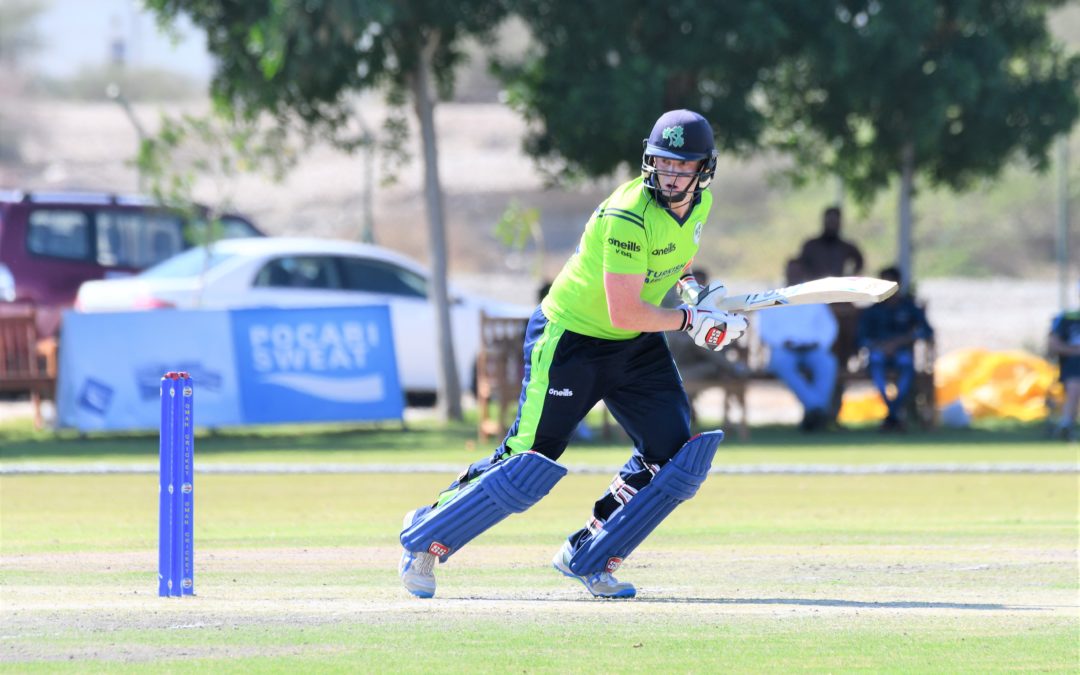
MUSCAT – Until yesterday, only 13 cricketers in the world had hit an international century in all three formats of the game. Now it is 14, with Ireland’s Kevin O’Brien adding his name to that list. O’Brien’s scintillating century against Hong Kong was also not only his first T20 International ton, but the first-ever for Ireland too.
O’Brien has had a busy year – not only has he played 30 times for Ireland across all three formats of the game, but domestically he has featured in a double-trophy winning Leinster Lightning side in the Test Triangle Inter-Provincial Series, and his club side won the Clear Currency National Cup for the first time last month.
Cap number 655 for Ireland, O’Brien first appeared in the green on 11 June 2006 in a List A match against Sussex. Now, just over 13 years later, the Dublin-born all-rounder is approaching his 350th appearance for Ireland (currently 349). Along the way he has collected a number of records, including fastest century in the Cricket World Cup (2011), first Test century for Ireland (2018) and now first T20I century for Ireland (2019).
Routinely reinventing his game, he has only this year been elevated to the opening role in T20I this year and the move has seen him flourish. In 2019, O’Brien has scored 583 runs from an incredible 353 balls in 14 innings, an average of 41.64 and a strike rate of 165.16. This is currently the fourth highest number of runs in a calendar year in T20I cricket history, and he still has potentially eight to ten more matches to play before the end of the calendar year.
Speaking from his hotel in Muscat on a rare day off of late from playing or training, O’Brien said:
“It’s obviously a very proud moment to score the first T20I century for Ireland. I’m very happy with the way it’s turning out since moving to the top of the order, and hopefully the form can continue for the next 2 to 3 weeks leading into the World Cup Qualifier.”
“The squad is progressing nicely and, despite a little setback against Oman, all-in-all we’re playing some good cricket. We’re putting up some good totals, we’re fielding very well in most games, and we’re starting to improve slowly with the ball. We’ve still got three games before the first Qualifier match in Abu Dhabi, so if we can continue this trend we’ll be in a good position. Fingers crossed we can use the next three games as good preparation and look to win all three – they’ll be three tough games so we’ll have to play well.”

Oct 8, 2019
7th October 2019: Rhys McClenaghan has qualified to the pommel-horse final at the 2019 FIG Artistic Gymnastics World Championships in Stuttgart, the first ever world final for an Irish gymnast. McClenaghan scored a superb 15.200 on pommel yesterday during the first of the two-day qualifying rounds and goes into the finals in the hugely impressive 2nd position. In doing so his qualification for the Tokyo 2020 Olympics is looking very positive, however the official confirmation will come from the international gymnastics federation (FIG) once the apparatus final draws to a close next Sunday 13th Oct. Rhys will compete in the pommel horse final on Saturday 12th October with finals starting at 3pm.
Commenting on the achievements Ciaran Gallagher, CEO Gymnastics Ireland said:
‘Rhys has done it again! Another historic result firstly for himself and secondly for Ireland as a sporting nation. I can only congratulate Rhys, our national coach Luke Carson and Performance Manager Sally Johnson on faultless preparation for this event following his shoulder surgery in later 2018. Along with the rest of members and staff at Gymnastics Ireland We can wait to see him compete in the World Pommel Final on Saturday!’
Fellow gymnast Adam Steele scored 77.431 in the All-Around competition, ranking 76th in the world concluding competition. Earlier in the week gymnasts Emma Slevin, Meg Ryan and Kate Molloy also finished on the Women’s All-Around qualifiers Friday with the highest score of 13.400 on Vault for both Ryan and Slevin. For the Women’s Artistic gymnasts this competition was focused on gaining experience at their first senior Worlds and continuing in their long-term preparation and development targeted at the World Championships in 2022 and Paris 2024. For full results, live scores and more details of this competition visit the official World Championships website here. https://www.stuttgart2019.de/en/event/finale-geraete-1/
-Ends-
———
Editors notes
For more information contact Caroline Ledwith caroline@gymnasticsireland.com
Photography is available FOC to sports desks

Oct 3, 2019
Following on from previous notices in January 2019, the Data Protection Commission issues an important message on personal data transfers to and from the UK in event of a ‘no deal’ Brexit.
All-Island NGB’s may find this relevant.
https://www.dataprotection.ie/en/news-media/latest-news/dpc-issues-important-message-personal-data-transfers-and-uk-event-no-deal
Please also see below a list or digest of information on general queries relating to Brexit. “Getting Ireland Brexit Ready”, which contains a series of guidance notes and other website references for nearly all of the areas mentioned above:
- Getting Ireland Brexit Ready
https://www.gov.ie/en/publication/a7ba02-brexit-info/
- Administration and Banking
https://www.gov.ie/en/publication/52c5c4-administration-and-banking/
https://www.gov.uk/check-uk-visa
- World Trade Organisation – VAT, Tax Customs
https://www.wto.org/english/tratop_e/tariffs_e/tariffs_e.htm
https://www.gov.ie/en/publication/bf5200-data-management/
https://www.gov.ie/en/publication/a09c0f-brexit/
https://www.gov.ie/en/publication/7feff3-brexit-business-useful-contacts/

Oct 3, 2019
For every €100 invested in sport by Government, Exchequer receives up to €195 in tax revenues – new report
Research findings published by the Federation of Irish Sport in partnership with Investec
- Research into economic value of sport in Ireland represents first major evaluation study since 2010
- Key findings include: sports volunteerism valued at €1.1billion; sport supports €2.7 billion in consumer spending and directly employs 39,500 people
- Sports tourism is worth €500m annually, rising in years when the country hosts major sports tournaments
- Research represents first phase of a comprehensive body of research into the value and impact of sport in Ireland.
For every €100 invested in sport by the Irish Government, the Exchequer receives up to €195 back through taxes on sports-supported expenditures and incomes, according to new research published by the Federation of Irish Sport in partnership with specialist bank Investec.
The Federation of Irish Sport is the representative organisation for the National Governing Bodies of Sport (NGBs) and the Local Sports Partnerships (LSPs) in Ireland. The Federation’s membership consists of over 100 NGBs and LSPs from all 32 counties, including the GAA, FAI, IRFU, Swim Ireland, and Athletics Ireland.
The research partnership represents the first phase of a larger body of research aimed at evaluating the economic value and impact of sport to the Irish economy, government and volunteering, as well as its health and social benefits. The research is drawn from a range of EU-level and Irish-level data sources*.
Key findings from the report include:
- Employment: Sport contributes approximately 4% of gross added value in Ireland. It directly employs 39,500 people, accounting for 1.7% of the workforce. This is a greater number than the total number of primary school teachers in Ireland.
- Household expenditure: Sport accounts for 7% of total consumer expenditure. This equates to an average of €30 per household per week, putting it on a par with clothing and footwear, and alcohol and tobacco.
- Volunteering: The economic value of sports volunteering is approximately €1.1 billion per year, should the average industrial wage be applied to this unpaid work.
- Sports tourism: Sports tourism generates €500 million per annum, and more in years whereby Ireland hosts major international sports events.
- Government funding: State investment in sports has not kept pace with the improvement in the public finances during the economic recovery. Central Government expenditure on sports and recreation is lower than 2009 despite a 77% increase in tax revenues during this period. This is at odds with the beneficial impact of sports investment on the public purse.
- Government return: The State may recoup approximately €195 in tax revenue for every €100 it spends on sports-related goods and services. An active sports-related economic policy can also help counter unemployment.
- Health costs: In addition to a positive revenue impact on the public finances, increased investment in sport could reduce public health expenditure. An estimated 62% of the population are overweight or obese. This is believed to cost the State over €1 billion annually. Separate research estimates that there are 4,000 preventable deaths in Ireland each year due to physical inactivity.
National Sports Policy 2018–2027
Last year, the Government launched Ireland’s first ever National Sports Policy, a comprehensive ten-year plan to get even more people participating in sport and physical activity.
Within this, the Government pledged to double sports funding from €111 million per year to €220 million per year over a ten-year period, including an 11% increase in capital funding in the 2019 Budget.
In light of the publication of the National Sports Policy, the Federation of Irish Sport made a Budgetary Submission in August this year asking that the Government again deliver on its commitment to increasing investment in current sports funding.
FOIS Comment
Speaking at the publication of the report, Mary O’Connor, CEO of the Federation of Irish Sport, said:
“Sport is central to the Irish story. It’s also an essential contributor to the Exchequer, social inclusivity and participation, health, and tourism. Critically, as our research shows, investing in sport makes economic sense.
“The last significant body of economic research undertaken in Ireland was the Indecon Report published by the Irish Sports Council in 2010. Thankfully, nearly a decade later, the Irish economy and our public finances are in a far healthier place. Tax receipts are up 77% on ten years ago and the general economic sentiment is cautiously confidence, despite Brexit and other international challenges.
“However, as our research demonstrates, Government investment in sport has not kept pace with growing tax revenues. The National Sports Policy 2018 – 2027 signalled a very positive step forward in demonstrating the Government’s renewed commitment, and critically, the €2.5 million increase in core funding in Budget 2019 represented the first budgetary increase in a decade. While this increase was a relatively small sum of the money in the overall Budget spend, it had a hugely positive impact on the Irish sports community.
“Our single biggest ask ahead of next week’s Budget is that it provides for further investment in people and programmes. We believe it is essential that Budget 2020 takes the second step on the road to meeting the National Sports Policy’s very laudable goal of doubling sport funding over the ten-year life of the policy.
“Sport needs this to happen on a year-on-year basis if it is to meet the challenging participation targets set out in the National Sports Policy.”
Minister Griffin comment:
The Minister of State for Sport, Brendan Griffin TD, also welcomed the publication of the report:
“The value and significant contribution of sport to Irish society comes across very clearly in this research. The Government is acutely conscious of the importance of sport and we have spelt that out very clearly in the 10-year National Sports Policy that was launched last year. We have committed to increasing sports investment over the next decade and we will progressively deliver on that commitment”.
The Federation of Irish Sport’s ‘An Assessment of the Economic Benefits of Sport in Ireland’ report is available to download at IrishSport.ie.
ENDS
For media enquiries, contact:
- Paddy O’Dea| paddy@pr360.ie | 01 637 1777 | 086 357 3365
- Barry Murphy I barry@pr360.ie I 01 637 1777 I 087 266 9878
Notes for editor:
*The entire research bibliography and methodology is detailed in the report. The report is available for download here
