
A €5,000 PAYE Threshold: A Small Fix That Would Save Grassroots Sport

About the author: John Perry is Tax Partner at Ogier and lead tax adviser to the Federation of Irish Sport.
Ireland’s grassroots sporting system is quietly buckling under a tax problem that was never aimed at it. As Budget 2027 approaches, there is a simple, targeted and fiscally responsible fix on the table: a €5,000 de minimis PAYE threshold for modest payments made by amateur and grassroots sports bodies to the coaches, referees, tutors and officials who keep community sport running. This is the “ask” the Federation of Irish Sport have been putting directly to Government, and it deserves to be granted.
What Karshan changed
The catalyst is the Supreme Court’s 2023 decision in Revenue Commissioners v Karshan (Midlands) Ltd t/a Domino’s Pizza. The case clarified the test for distinguishing a “contract of service” (employment) from a “contract for services” (self-employment), establishing a structured five-point framework that looks to the reality of the working relationship rather than the written contract. It was decided in a commercial gig-economy context, but its blanket application now risks capturing low-value, irregular and public-benefit engagements. Revenue, having persisted and won, is understandably focused on PAYE compliance across the board. To manage the fallout, Revenue opened a time-limited disclosure opportunity allowing employers to regularize payroll tax for 2024 and 2025 without interest or penalties where genuine misclassification had occurred, with the option available until 30 January 2026.
Why the exemption makes sense
Grassroots sport depends on people who coach, referee and tutor on a casual, seasonal basis, usually alongside a primary job, across multiple clubs, and for community rather than commercial motives. A €5,000 annual threshold would recognize the ancillary, non-commercial nature of that income while preserving full PAYE and reporting for higher-value or economically dependent roles. Crucially, it would not exempt anyone’s income from tax; the recipient remains liable, and the measure protects Exchequer revenue. It is also entirely consistent with existing policy: our tax code already uses de minimis thresholds and easements, from the Section 235 exemptions for sports bodies to PAYE exclusion orders. This is proportionate tax administration, not special pleading.
The cost of doing nothing
The evidence of inaction is already stark. In a survey covering roughly 90 percent of Local Sports Partnerships, about 85 percent reported cutting programmes, training or events in 2026, with many operating at 26 to 50 percent below normal capacity. These reductions are not demand-driven; demand remains strong, but organisations are constrained by compliance costs and uncertainty. Historic misclassification disclosures have most commonly landed in the €10,000 to €50,000 range. Between half and three-quarters of bodies report growing difficulty engaging tutors and coaches, who are simply walking away. For Companies Limited by Guarantee with thin reserves and no local-authority payroll support, this is now a genuine solvency and director-exposure risk. Left unaddressed, the sector faces further service cuts, higher participant fees and falling participation, undermining the return on significant public investment.
The campaign, and what comes next
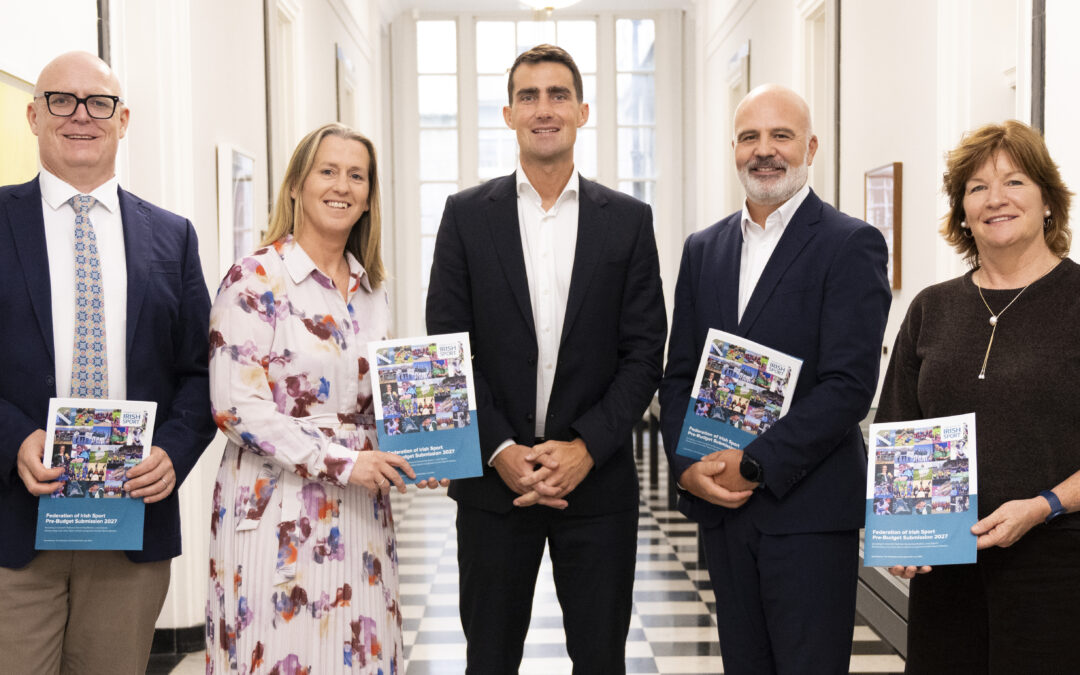
This proposal is the product of sustained advocacy led by CEO, Mary O’Connor: a detailed Budget 2027 submission to the Department of Finance, sector-wide survey evidence, a Sport Ireland listening session, and a ministerial briefing setting out the ask. That engagement continues following productive meetings with Minister O’Donovan, Minister McConalogue and Minister Chambers. This is a clear, practical and low-cost action that protects tax integrity while safeguarding participation, volunteer capacity and public health. Budget 2027 is the moment to act.