
Federation of Irish Sport (FIS) has called on Government to make a significant long-term investment in sport as part of Budget 2027, warning that grassroots programmes, participation initiatives and community sport organisations are facing growing financial and administrative pressures. Sport and physical activity can no longer be viewed through the lens of leisure. It is the most cost-effective frontline defence against a compounding preventative healthcare crisis. Every €1 invested in core sports participation reduces future state spending on chronic illness, mental health services, and cardiovascular care.
Click here to read full Submission document.
FIS Asks for Budget 2027:
- A 10% Annual Uplift in Funding for NGBs and LSPs.
- Introduction of a €5,000 Exemption PAYE Threshold for Certain Payments in Amateur Sport.
- Request for Government Commitment to Research and Publish a Report on an Additional 1% Betting Levy for Sport.
The Federation’s pre-budget submission seeks a three-year commitment to increased funding for National Governing Bodies (NGBs) and Local Sports Partnerships (LSPs), measures to ease the burden on volunteers and local organisations, and a review of new funding options to support the future growth of sport in Ireland.
Recent Sport Ireland data shows that 2.12 million adults now regularly participate in sport, while nearly two in five adults are classified as highly active. This underlines the potential for increased investment in sport to deliver substantial benefits for public health, wellbeing, and the State.
Grassroots sport at risk
The Karshan Case ruling has had a significant impact on the sports sector impacting modest payments made by amateur and grassroots sports bodies to the coaches, referees, tutors, and officials whereby they must be declared and accounted for as PAYE employees. The application of standard employment status compliance requirements to these low-value engagements has created a level of administrative and financial burden that is disproportionate to the scale of the delivery and engagement involved and inconsistent with the underlying nature of sport and community participation delivery. The delivery of NGB and LSP sports programmes relies heavily on casual and seasonal engagement of tutors, coaches and officials. The impact is already being felt by Local Sports Partnerships with approximately 85% of them have already reduced programmes, training initiatives, or events during 2026.
The Federation of Irish Sport is proposing a €5,000 de minimis PAYE threshold for modest payments made by amateur and grassroots sports bodies to the qualified coaches, referees, tutors, and officials who keep community sport running. This proposal is a real and viable solution for Government to prevent the unintended consequences of the ruling.
Commitment to Research and Publish a Report on an Additional 1% Betting Levy for Sport
The Federation respectfully calls on the Minister and his Department to lead a Government commitment to research and report on the potential introduction of an additional 1% Betting Levy for Sport.
The proposed review would consider the fiscal, legal, and ethical feasibility of increasing the existing Betting Duty, with the additional revenue ringfenced for participation and community sport. An interdepartmental review, led by the Departments of Finance and Culture, Communications and Sport, and involving Sport Ireland and other stakeholders, should examine potential revenue, options for administering the funds—including a potential Sports Investment Fund—and the wider social and economic benefits of increased participation in sport. The review should also include any risks, constraints, and implementation considerations. Government has an opportunity to take a serious, evidence-based step towards creating a sustainable funding stream for sport. We are asking the Minister to lead that process and commit to publishing the evidence within 6–9 months.
Federation of Irish Sport CEO Mary O’Connor said: “A fundamental step-change in sports funding is required in Budget 2027. To build enduring programmes, retain vital personnel, and attract professional and volunteer talent, we must pivot away from short-term financial cycles. We urge the adoption of a multi-annual funding model built on an annual uplift of 10% over the next three consecutive years. This will empower the sector with the strategic certainty and financial security required to deliver long-term, meaningful outcomes for the state.”
Sport plays a transformative role in public life:
- 97,000 cases of disease were prevented through participation in sport and physical activity in 2019, saving the State €405 million in healthcare costs.
- Every €100 invested in sport returns up to €195 to the Exchequer through taxation.
- The sector contributes €3.7 billion to the Irish economy and supports 64,000 full-time equivalent jobs.
Photo captions:
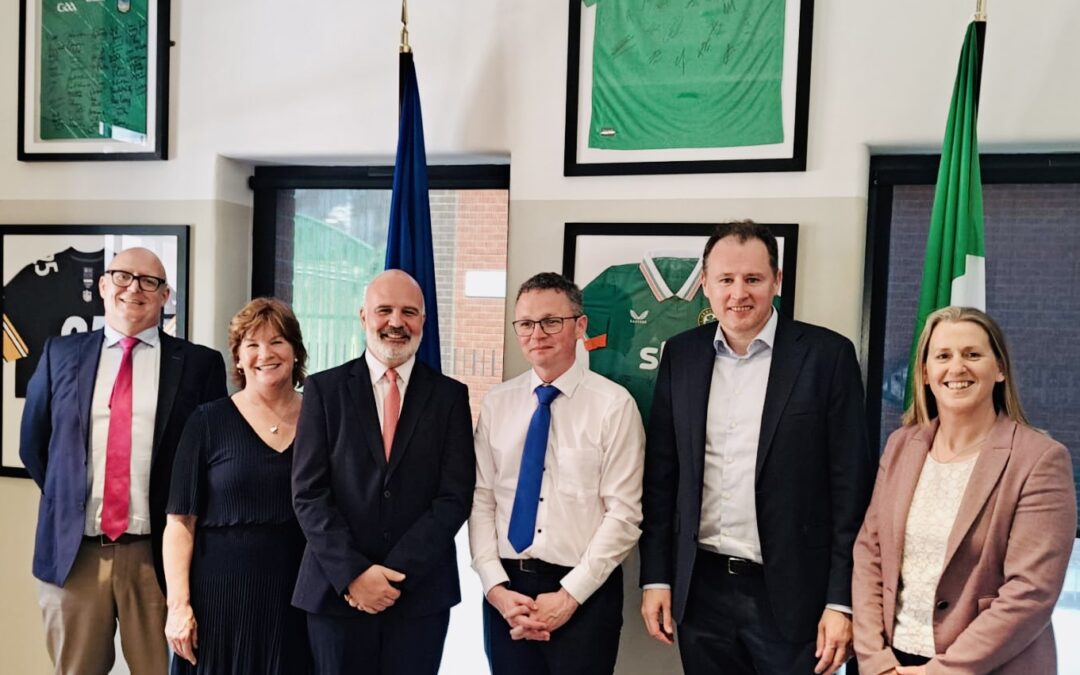
Pictured in May 2026: FIS Chair Enda Lynch CEO Badminton Ireland, Rosarie Kealy CEO Waterford Local Sports Partnership, John Perry Tax Partner at Ogier Ireland, Minister O’Donovan Minister of Culture, Communications and Sport, Minister McConalogue Minister of State for Sport and Postal Policy, FIS CEO Mary O’Connor.
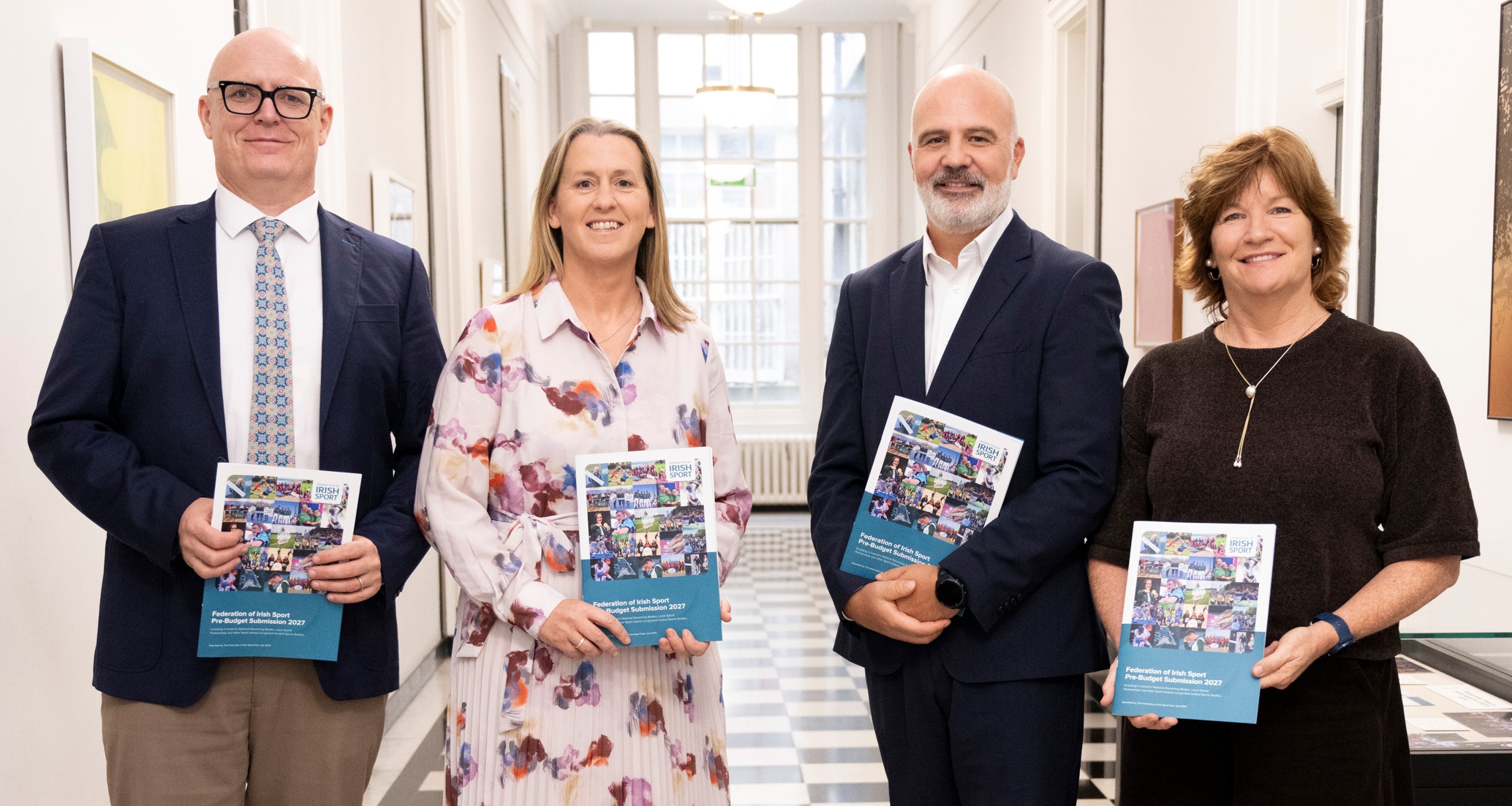
Pictured in September 2026 with FIS Pre-Budget Submission: FIS Chair Enda Lynch CEO Badminton Ireland, FIS CEO Mary O’Connor, John Perry Tax Partner at Ogier Ireland and Rosarie Kealy CEO Waterford Local Sports Partnership.