
May 30, 2016
The newly elected Minister for Transport, Tourism and Sport, Shane Ross TD, took to the stage on Thursday, 26th May to address Ireland’s National Governing Bodies of Sport (NGBs) and Local Sports Partnerships (LSPs) for the first time since taking the office.
Speaking at the Federation of Irish Sport (FIS) Annual Conference 2016 in the spectacular Hogan Mezzanine Suite at Dublin’s Croke Park, Minister Ross welcomed the opportunity to meet with NGBs, LSPs and other sports stakeholders and to work closely with them during his tenure as Minister for Sport. The Minister outlined that his priority for sport over the coming months is the development of a 10-year National Sports Policy Framework.
Minister Ross said: “I will shortly be publishing a detailed Public Consultation document and inviting the sports sector, stakeholders in the public and private sector and the general public to respond to questions under a wide range of topics about the future of Irish sport.
“I recognise the importance of sport in the daily lives of Irish people and the benefits that investment in sport has economically, socially and on the health of the general population. It is imperative that we continue to recognise the crucial role that sport plays in Ireland. I look forward to hearing the opinions, views and ideas that stakeholders will have about the future shape of Irish Sport Policy.”
The FIS Annual Conference – the only of its kind in Ireland – brought together NGBs and LSPs, along with leaders in government and business, to share ideas, learn from experts, meet industry exhibitors and engage in lively, sports-related debate.
The theme of this year’s event was ‘Building Leadership Capabilities in Sport’, and the Keynote Address was delivered by John Steele, Executive Director of Sport at Loughborough University, Founder and Owner of Unforgiving Minute and Chairman of the English Institute of Sport.
Steele’s previous experience in sport includes a career as a professional rugby player, Head Coach of the Northampton Saints’ Heineken Cup-winning team of 2000, Chief Executive of the Rugby Football Union and Chief Executive of UK Sport.
Also speaking on the day was the President of the Olympic Council of Ireland Pat Hickey, Dublin Senior Football Manager Jim Gavin, Director of the Irish Institute of Sport Gary Keegan, CEO of Swim Ireland Sarah Keane and Director of Human Resources at the Irish Defence Forces Training Camp Lt. Col. Mark Prendergast.
A total of 160 sports people and stakeholders, government officials and business delegates packed the conference room, including Olympians Ronnie Delaney, Joe Ward, Darren O’Neill and David Oliver Joyce.
James Galvin, CEO of the Federation of Irish Sport, said: “The Federation of Irish Sport’s Annual Conference has undoubtedly become our flagship event, giving our member organisations a unique opportunity to engage with each other, along with leaders from both government and business. We want to ensure that girls and boys; women and men, regardless of ethnic and socio-economic background or age, have a reasonable expectation of access to sport and physical activity at whatever level they choose. Because we believe Sport Matters – it matters for health and well-being; it matters because it helps young people perform better in school and it matters because it brings our communities together. We also want to create talent pipelines to enable young people who possess exceptional talent and potential in a particular sport to represent this country on the greatest sporting stages.
“Sport also matters for public policy. We know investment in sport produces positive outcomes relating to the economy, health, education, as well as other positive social outcomes. To get there we need leadership, teamwork, commitment and action.”

Apr 26, 2016
The Irish Times is on the hunt for the Best Sports Club in Ireland: clubs with great spirit, great communities and great achievements.
This sporting competition is all about the taking part, not the winning. The club can be large or small, urban or rural, cup winner or community club.
The winning sports club, to be announced in June, will receive a prize of €5,000, with a further €1,000 for another deserving entrant. The prize is provided by the National Dairy Council (NDC), the competition’s sponsor.
The winner will be decided by a panel of judges chosen by The Irish Times. Judges will make their decision based on criteria including community involvement, club spirit and, of course, sporting achievement.
Conor Goodman, Irish Times Features Editor and chair of the judging panel, says: “This is a genuine celebration of participation rather than of sporting prowess, an effort to recognise the great local organisations around Ireland, minority-interest groups, tight teams, bands of driven individuals, volunteers, fans, drivers, substitutes, supporters, sandwich makers, goal scorers, committee members, fundraisers, visionaries, chairpersons, coaches, kit launderers, parents and local heroes.”
Rob and David Kearney launched The Best Sports Club in Ireland with a photo shoot on Tuesday, 12th April. NDC chief executive Zoë Kavanagh says that The Best Sports Club in Ireland sponsorship celebrates the positive role that dairy can play in sports nutrition, at whatever level you play or enjoy sports.
“In the area of sports nutrition, milk is recognized as a convenient, affordable and accessible option post-sport/exercise. Following a healthy, balanced diet is essential for any athlete regardless of sport or competitive level, and the timing and type of foods chosen can impact performance” says Kavanagh. Kavanagh explains that Rob and Dave Kearney, who grew up on a farm in Co Louth, have been ambassadors for the National Dairy Council since the start of 2014. “They have been superb role models, resonating with people of all ages and helping us to promote the benefits of dairy as part of a balanced diet and active lifestyle,” says Kavanagh.
This is the fifth such competition run by The Irish Times. In 2012 we named Westport, Co Mayo, as the Best Place to Live in Ireland; in 2013 Loop Head, Co Clare, won the title of Best Place to Holiday in Ireland; and in 2014, with an emphasis on outdoor activity, we chose Erris, Co Mayo, as the Best Place to Go Wild in Ireland. Last year Killarney National Park, in Co Kerry, was named the Best Day Out in Ireland.
In all these contests the information that you have supplied has been central. So get writing.
Nominate your club, and find full terms and conditions at www.irishtimes.com/bestsportsclub.
Mar 9, 2016
Media Release
9 March, 2016
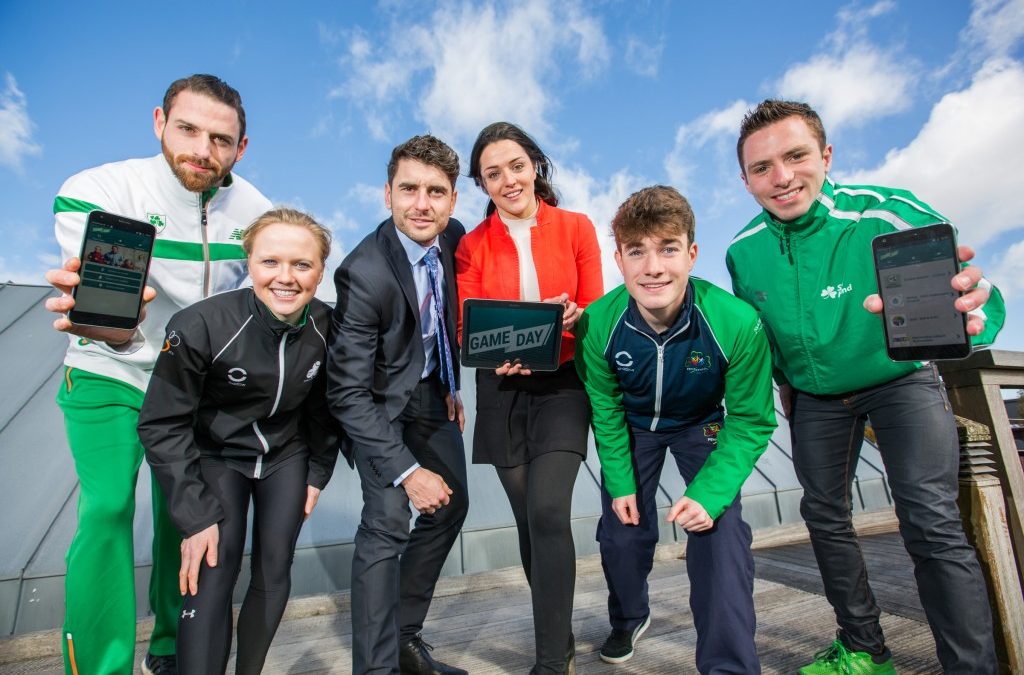
The Federation of Irish Sport and the Vodafone Ireland Foundation have launched ‘GameDay’, a new app that allows the public to locate their nearest club for over 30 sports¹ organisations including IRFU, Swim Ireland and Athletics Ireland. The app uses location-based services and GPS technologies to create a grassroots network of sports clubs across every county in Ireland. This new venture is the brainchild of four-time All Star Dublin Footballer, Sinead Goldrick, who came up with the creative idea of the GameDay app after winning an internal Vodafone competition. The aim of the competition is to encourage social innovation while ‘Connecting for Good’ in their workplace
The cutting-edge piece of technology has been developed by the Federation of Irish Sport (FIS) and the Vodafone Ireland Foundation, Vodafone Ireland’s philanthropic arm. GameDay works by allowing users to search by sport, county and local clubs. Each club involved has a profile with their contact details, website, social media links and directions to their grounds using a combination of GPS and Google Maps. The app currently holds the details of over 2,000 sports clubs and their associated National Governing Bodies nationwide. The IRFU, Swim Ireland and Athletics Ireland are among the governing bodies that are supporting this initiative, with more bodies expected to sign up. Clubs that do not have a profile on the site can create their own profile for free on the GameDay website – www.gamedayapp.ie
The app is part of a wider FIS “Game Day” initiative to encourage and facilitate participation in sport at local level throughout Ireland. Speaking at the launch Bernard Brogan, President of the Federation of Irish Sport, said: “The Federation of Irish Sport have long advocated for increasing physical activity among the general public. Not only will the GameDay app get more people involved in Ireland’s huge variety of sports clubs, it is sure to offer additional support to our existing athletes, clubs and NGBs across the country. The Game Day initiative aimed to get more people involved in sport on a regular basis, and this new app is the perfect tool to help make that happen.”
Ray Collins, Vodafone Ireland Director of Strategy and Chairman of the Vodafone Ireland Foundation said: “The GameDay app has enormous potential to get more people in Ireland involved in sport and we are delighted to have played a part in its development. Our annual social innovator competition challenges our staff to explore ways of using our technology and resources to improve the lives of others. This app is a perfect example of what we want to achieve.”
James Galvin, CEO of the Federation of Irish Sport, commends the work put in to develop the GameDay app, and is confident it will benefit the Irish sporting community.
He said: “The Federation of Irish Sport seeks to highlight the varied benefits of sport and physical activity in our communities and in areas such as business, health, the economy and social inclusion. The contribution of sport to Irish society cannot be understated, so we are delighted to work alongside the Vodafone Ireland Foundation in this social innovation project that is sure to benefit the Irish sporting community. We believe the app will provide a useful tool to easily connect people in communities with sport and physical activity, to promote the variety of opportunities that exist and the benefits of getting involved in a local club, which extend way beyond the playing field.”
FIS represents 75 NGBs and 26 Local Sports Partnerships (LSPs) across the country. Their mission is to promote the benefit and value of sport to Irish life.
The GameDay app is now available to download in the App Store by searching ‘GameDay FIS’ and the Play Store by searching ‘Gameday’.
Visit www.gamedayapp.ie to register your club now
-ENDS-
For further information, please contact:
Cian Murray, Communications Executive
Federation of Irish Sport,
Irish Sport HQ,
National Sports Campus,
Blanchardstown,
Dublin 15.
T: (01) 687 1665 / 083 467 9464
E: cian.murray@irishsport.ie
Notes:
¹ NGBs’ whose clubs’ details are currently available in the app:
- IRFU
- Swim Ireland
- Golfing Union of Ireland
- Irish Ladies Golfing Union
- Gymnastics Ireland
- Cricket Ireland
- Irish Hockey Association
- Irish Squash
- Irish Athletic Boxing Association
- Irish Clay Pigeon Shooting Association
- National Target Shooting Association of Ireland
- Triathlon Ireland
- Irish Water Safety
- Tennis Ireland
- Irish Tug-of-War Association
- Athletics Ireland
- Mountaineering Ireland
- Irish Judo Association
- Motorsport Ireland
- Pitch & Putt Union of Ireland
- Irish Wheelchair Association
- Ice Skating Association of Ireland
- Horse Sport Ireland
- Irish Ten Pin Bowling Association
- Irish Martial Arts Commission
- Archery Ireland
- Irish Canoe Union
- Volleyball Association of Ireland
- Bowling League of Ireland
- Pentathlon Ireland
- Rowing Ireland
- Vision Sports Ireland
- Local Sports Partnerships
² The Vodafone Ireland Foundation annual Social Innovator competition aims to create a culture of social innovation in the workplace in keeping with its mission of ‘Connecting for Good’. Entrants are asked to identify ways to improve the lives of others using social innovation; making use of the technology and resources available to them at Vodafone.

Feb 17, 2016
Following yesterday’s announcement by Sport Ireland and the Department of Transport, Tourism and Sport that there will be an allocation of €27m in sports grants for 2016, CEO of the Federation of Irish Sport James Galvin, said:
“We at the Federation of Irish Sport warmly welcome yesterday’s news from Sport Ireland and the Department that they will be investing a total of €27m in sport this year. This is positive news for Irish sport, particularly as we are approach the 2016 Olympic and Paralympic Games.
“Sport investment plays a huge part in the success of our country’s National Governing Bodies (NGBs) of sport and indeed our Local Sports Partnerships (LSPs), and we will continue to work closely with the Department towards securing increases in future investment.
“Successful NGBs and LSPs provide the optimum means to implement the goals of the Healthy Ireland and National Physical Activity Plans. In addition, NGBs play a vital role in recruiting and training coaches and leaders who deliver programmes at local level, which is a key driver of increasing participation – the importance of this cannot be underestimated.
“We also acknowledge the increased investment in high performance sport and look forward to further development of this vital area. By demonstrating this commitment to our elite athletes and offering every support, we will enable our sports men and women to excel and succeed at the highest level on the international stage, enabling athletes to achieve personal bests and improve our national records year-on-year.”

Dec 18, 2015
Mayo Sports Partnership
Website: mayosports.ie
Total ISC Funding in 2015: €221,430
Participant numbers in programmes: 15,000
Number of Clubs in Mayo Sports Partnership’s area: 580

Minister of State for Tourism and Sport Michael Ring tests his cricket skills at the launch in Ballyhaunis of a Û2m plus national investment package to establish Community Sport and Physical Activity hubs across the country. Watching anxiously at the launch were Mayo Sports Partnership’s Charlie Lambert, Cricket Ireland’s Warren Deutron, Irish Sports Council’s Pat O’Connor and members of Ballyhaunis Cricket Club. Picture Henry Wills.
Highlight of 2015: 25 communities across Mayo participate in “Operation Get Active Mayo” – In January / February 2015 over 700 men, women and children from all age categories took part in different walks and runs around the county which ran from Achill to Carracastle and Kilmaine to Belmullet.
Key objective for 2016: Continue to deliver on the Dormant Account supported programmes such as the Ballyhaunis Sports Hub (developing the first Cricket Practice facility of its kind in Irealnd), Goal to Work Sports Coach Training Programme and Youth Sports Leadership Training.

Action from the Western People West Of Ireland Women’s Mini-Marathon, Castlebar, Co. Mayo. Picture credit: Tomás Greally

Dec 15, 2015
Federation of Irish Sport Annual Review 2015
Bernard Brogan Calls on Political Parties to Commit to Making Two Hours’ PE Mandatory in Secondary Schools as Federation of Irish Sport Launches 2015 Annual Review
- One Hour Mandatory PE Urged for Primary Schools
- Key sporting triumphs in a massive sporting year for Ireland highlighted, including 20 per cent increase in medals won by Irish athletes
- Federation calls for establishment of new sports event bidding agency to secure prestigious international sporting events for Ireland

As the final whistle is about to be blown on a year of sporting highs, and ahead of a spring General Election, the Federation of Irish Sport has today called on political parties to commit to a level playing field when it comes to sport in Ireland. The Federation is calling for 2 hours’ PE in secondary schools and 1 hour PE in primary schools to be made mandatory, that tax reliefs be put in place and additional funding be extended to sport to bring it back to 2008 levels by 2021, and that a sports event bidding agency be established as a matter of urgency to bring prestigious international sporting events to Ireland.
The calls came as Bernard Brogan, President Federation of Irish Sport, launched its 2015 Annual Review capturing a year of sporting triumphs and successes for the National Governing Bodies of Sport and Local Sports Partnerships. He was joined at the launch in Dublin by Nora Stapleton, Ireland’s Women’s Rugby Team, Louise Quinn, vice-captain of the Women’s National Football Team, boxer Darren O’Neill and triathlete Susanna Murphy.

Bernard Brogan highlighted some of his 2015 sporting highs and how, as a nation, we need to nurture sport, starting in our schools:
“Sport has brought us many memorable moments this year. There have been fantastic victories for both the men and women’s rugby teams in the Six Nations during 2015. Then there was Shane Long’s stunning goal against World Cup champions Germany followed by ultimate qualification for the Euros in 2016. And, of course, how could I forget Dublin’s outstanding performance in bringing home Sam in the GAA All Ireland Senior Football Championships in September.
“Yet imagine what we could do if we were to build on the fantastic grassroots support for sport in our local communities. We know that only 35 per cent of primary schools and just 10 per cent of our secondary schools are receiving the recommended 60 and 120 minutes of PE respectively each week1. Of course, as adults too, we have a real challenge, with only a third of us getting the recommended 30 minutes’ exercise five days a week2. Sport needs to be supported, nurtured and grown and that is why it is incumbent on Government to step up to the plate and do what it can to ensure participation and that our young people and adults get the sporting chance that they deserve.”

James Galvin, CEO of the Federation of Irish Sport, pointed to some of the very tangible benefits afforded by Irish sport, while also emphasising how sport can give so much more:
“The figures are there for all to see. 40,000 jobs sustained by sport3. €1.9 billion in household spending on sport4. Over €1 billion in tourism spending on sport5. Half a million people volunteering their time to sport6. Plus, it’s estimated that by participating regularly in sport, we are 14 years’ younger in health terms7 – now, who could argue with that?
“The Federation of Irish Sport’s 2015 Annual Review published today highlights the wide and varied contribution that National Governing Bodies of Sport and Local Sports Partnerships have made to Irish sport in 2015. After years of steep declines in funding since 2008, there was a very welcome €3m increase in funding to Sport Ireland in Budget 2016. We now have a golden opportunity for sport to make a real difference to the life of our nation, but only if we grasp it. There have been a number of recent successes in securing international sporting events for Ireland, such as the Women’s Rugby World Cup 2017 and the IPC World Swimming Championships 2018. Think of what we could do if we were to establish a sports event bidding agency as has been done in Denmark where they now win four out of every five sports bids. We could be real contenders in bringing illustrious international events home to Ireland, such as the 2023 Rugby World Cup.
“A new National Sports Policy is in the early stages of development. This presents a real opportunity for government to put in place a strategy that allows sport to maximise its potential both on and off the pitch. For sport to really deliver in terms of our health, our society and our economy, we can’t sit on the sidelines and yell at the referee. We all have to play our part on the field and make it happen.”
Among the other highlights from the Federation of Irish Sport’s Annual Review 2015 were:
- Graeme McDowell, Padraig Harrington and Shane Lowry won on the US PGA Tour
- Leona Maguire became the World Number One Ranked Amateur Golfer
- Rory McIlroy won the Race to Dubai for the third time
- 5 Irish golfers – Paul Dunne, Jack Hume, Gary Hurley, Gavin Moynihan and Cormac Sharvin – took part in the Great Britain and Ireland Walker Cup team which was victorious over the USA
- Joe Ward and Michael Conlan won gold at the European Elite Championships in Bulgaria, with Dean Walsh bringing home bronze
- Mark English won silver in the 800 metres at the European Indoor Championships in Prague
- Arthur Lanigan-O’Keeffe was crowned men’s champion at the Modern Pentathlon European Championships in Bath
- Team Ireland Equestrian Showjumping Team won the Dublin Aga Khan Nations Cup
- The Irish ocHockhhHockey Team beat England to win bronze at the Euro Hockey Championships in London
- €21.3m was the value of the Ireland v England Six Nations match, with 15,000 visitors spending €11.5m, each person spending on average €764 during their trip
- €152m was the value of the Irish sports sponsorship rights fee market
- Over 31,000 supporters came to Croke Park to support the teams taking part in the TG4 LGFA All Ireland Finals, resulting in the largest attendance at a European female sporting event in 2015
- 13 World and 1 European Championship medals were won by Irish Paralympic athletes on the Road to Rio 2016
- Special Olympics Ireland athletes won 26 gold, 28 silver and 28 bronze medals at the 2015 World Games
- 66 medals were won by Irish athletes in 2015 in international competition, a 20 per cent increase on 2014
The Federation of Irish Sport’s 2015 Annual Review can be viewed here: Federation of Irish Sport Annual Review 2015


